
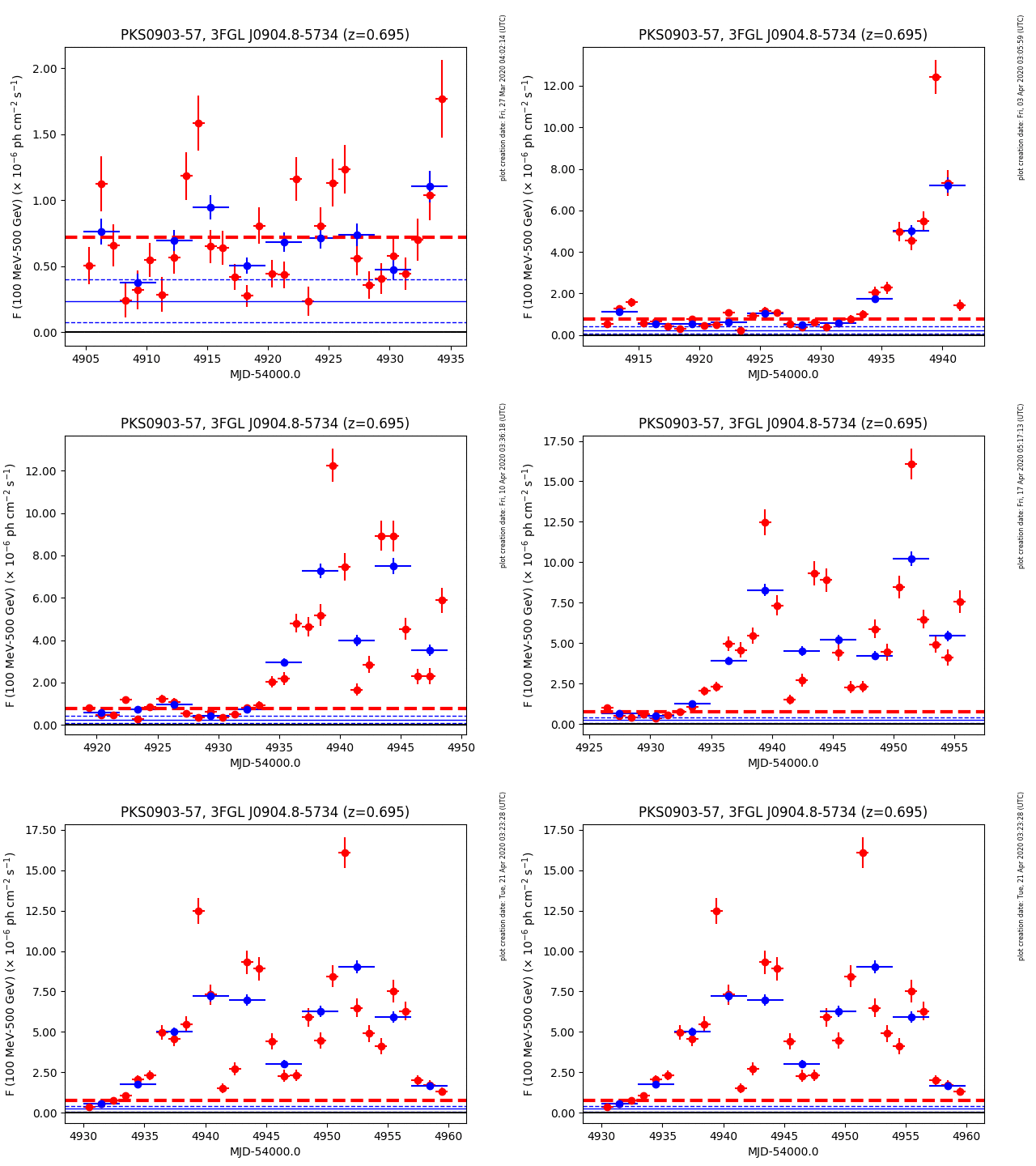
The flare that sweetened the lockdown
October 2026 Everyone remembers what they did in April 2020. With the Covid-19 pandemic hitting hard, practically the entire planet was sitting at home, hoping for the best. Thanks to its remote location, H.E.S.S.…
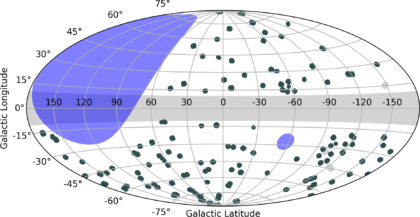
Cataloguing the high-energy Universe: the H.E.S.S. Extragalactic Sky Survey
May 2026 The initial phase of H.E.S.S., during which the array consisted of only the four 12-meter telescopes, lasted from 2004 until 2013, when the fifth telescope was added. Over the course of the…
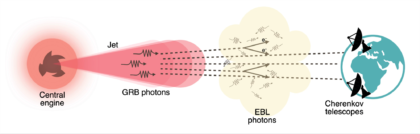
A H.E.S.S. Retrospective on Gamma-Ray Bursts
April 2026 Gamma-ray bursts (GRBs) are the most powerful explosions in the universe, releasing more energy in seconds than our Sun will in its entire lifetime. Since their discovery, understanding the processes that drive…
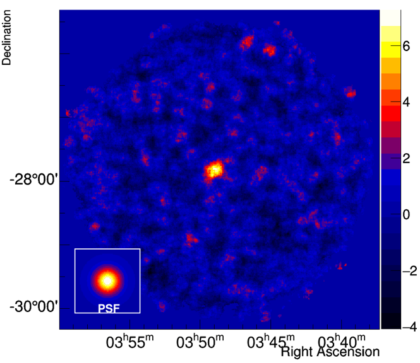
H.E.S.S.’ most distant blazar: PKS 0346−27
February 2026 A galaxy is said to be active if its central supermassive black hole accretes matter from its environment at a high rate, forming an accretion disk. This accretion of matter onto the…
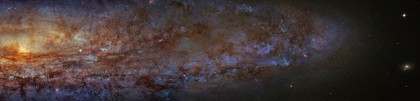
Revisiting the paradigm of hadronic acceleration in NGC 253
January 2018 Fig 1: The dusty galaxy NGC 253. Image curtesy apod.nasa.gov. The starburst in NGC 253 The Galaxy NGC 253 (shown in Fig. 1), also known as Sculptor galaxy, is located in the…
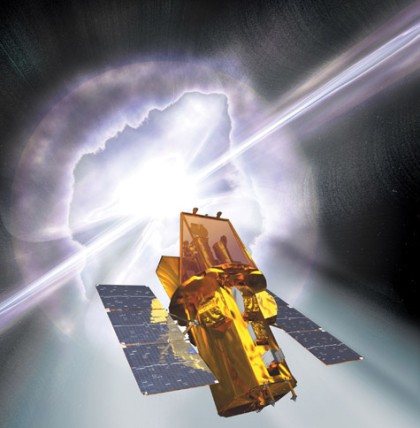
Gamma Rays from the Distant BL Lac 1ES 0347-121
October 2007 The active galaxy 1ES 0347-121 was discovered as an X-ray source in the Einstein slew survey (Elvis et al. 1992) and was later classified as a BL Lac type object (Schachter et…
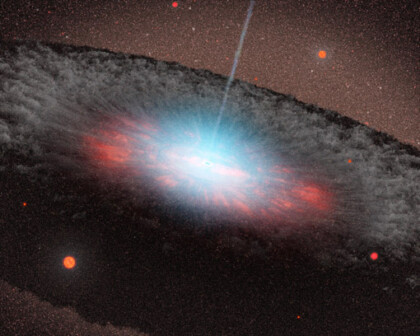
PKS 2155–304 – Photons from a Hotter Hell
September 2007 “Photons from a hotter hell” is the title of T. Weekes recent commentary in Nature, concerning the recent detection of giant outbursts of active galaxies observed in high-energy gamma rays. At the…
