The H.E.S.S. Site

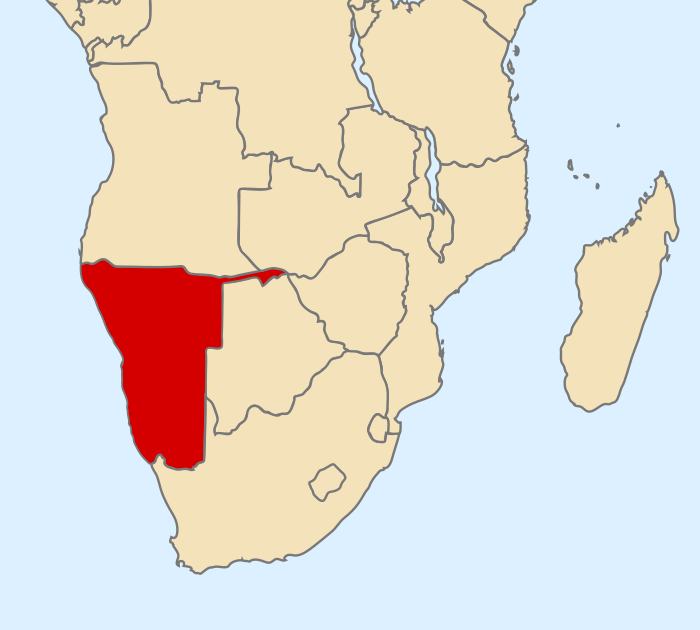
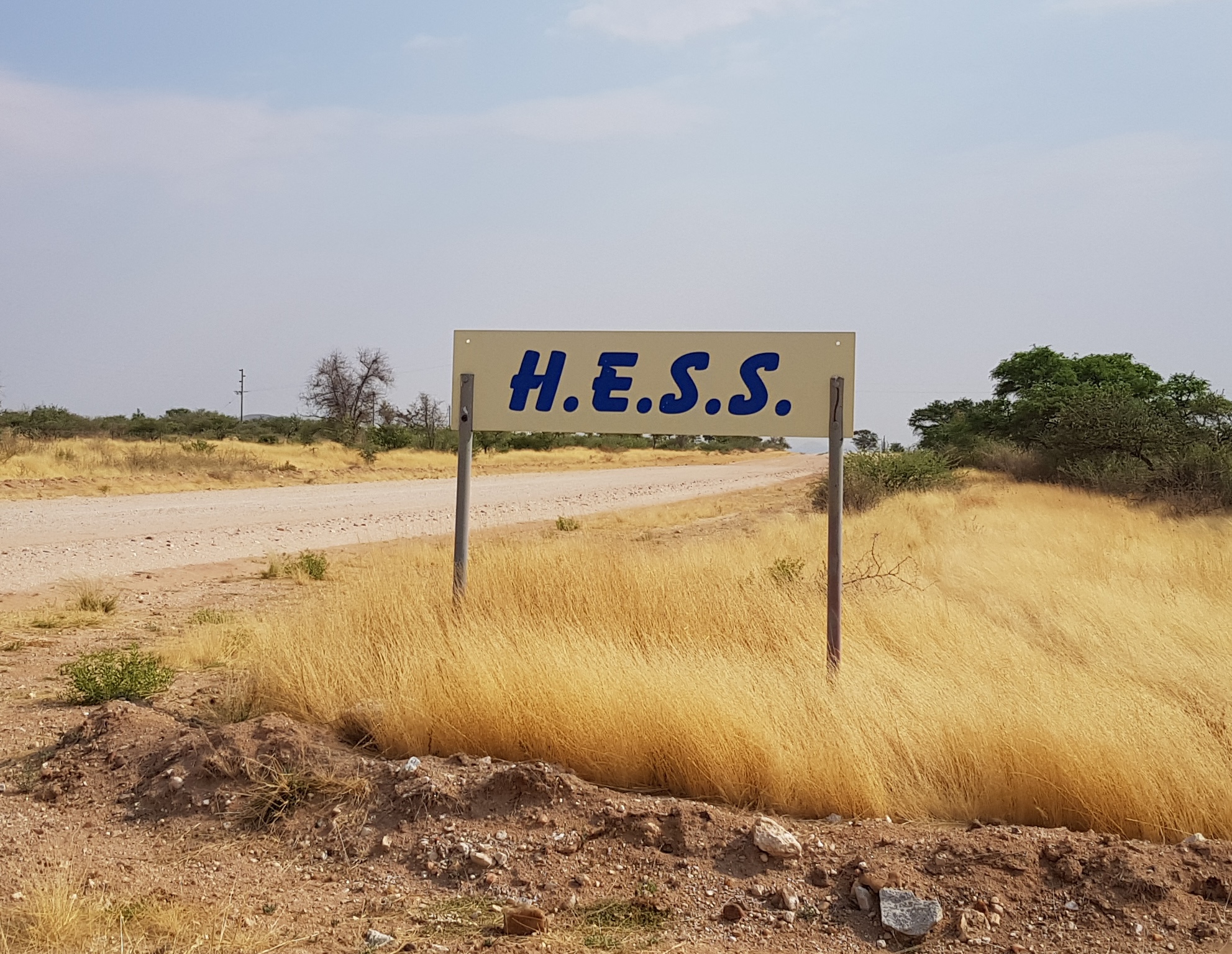
H.E.S.S. is hosted in the southern African country of Namibia. The location was chosen because of the excellent observing conditions and the generous support of the Namibian government as well as of the University of Namibia.

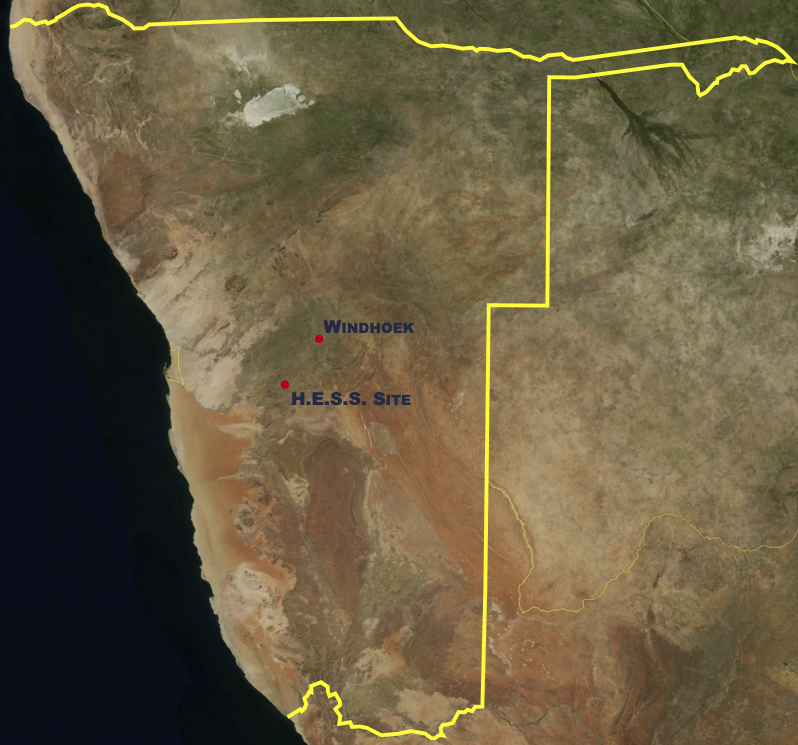
The site is located in the Khomas Highland, about 100 km south-west of Namibia’s capital, Windhoek. The coordinates are 23°16’18” S, 16°30’00” E, at about 1,800 m above sea level.

(Adapted from: Wikipedia, CC BY-SA 3.0, https://commons.wikimedia.org/w/index.php?curid=1446513)
(Adapted from: Wikipedia, https://commons.wikimedia.org/w/index.php?curid=735039)

Namibia

Namibia is in southwestern Africa, bordering on Angola, Zambia, Botswana, South Africa, as well as the Atlantic Ocean. Its capital is Windhoek.

With a total area of around 825,000 km2 and ~3.2 million inhabitants, Namibia is one of the least densely populated countries of the world. About 485,000 people live in Windhoek.

Namibia has a long and rich cultural history, with human settlements dating back as far as 25,000 B.C. Among the oldest ethnic groups living in Namibia are the San and the Damara.

Between 1884 and 1915, Namibia was a German colony. During the years 1904-1907, German settlers systematically killed approximately 10,000 Nama and 65,000 Herero, two native ethnic groups in Namibia. The German government officially recognised this as a genocide in 2021.

After the first World War, Namibia was occupied and governed by South Africa. It became an independent state on March 21, 1990.

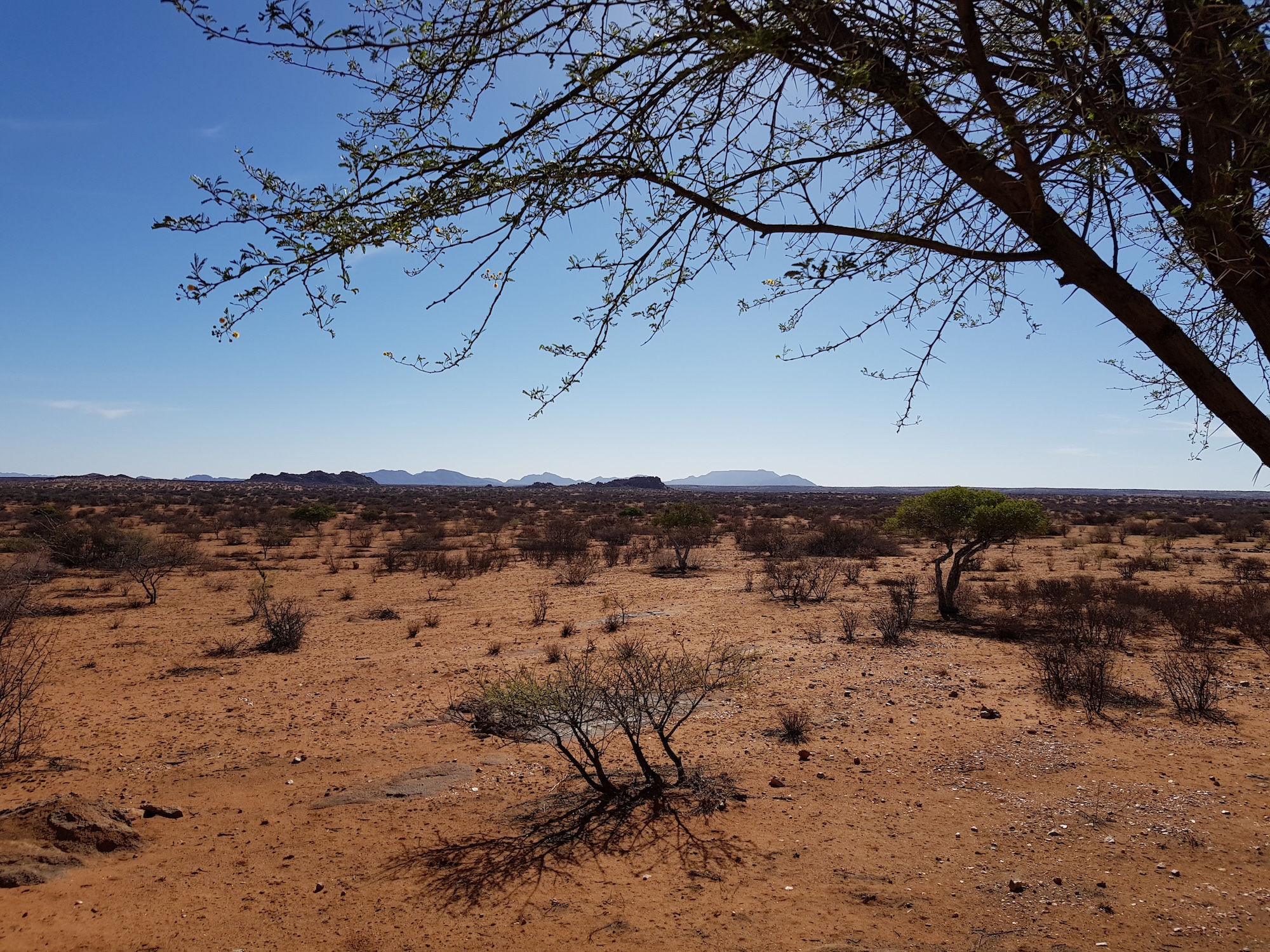
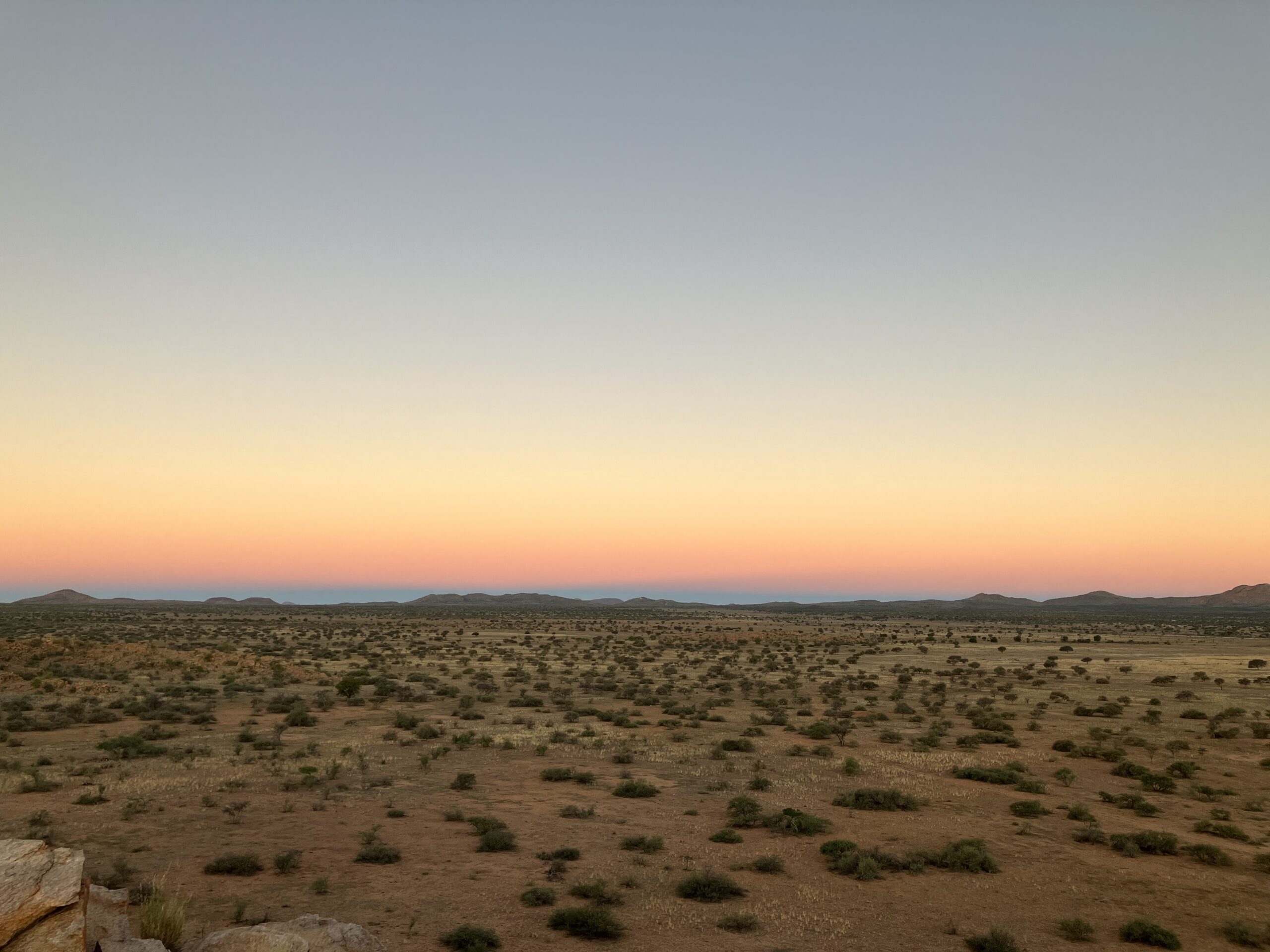
Namibia’s climate is very dry, making it suitable for performing astronomical observations. H.E.S.S. is located on the Central Plateau, a vast area in central Namibia that lies between 1,000 m and 2,000 m above sea level. Not far from the telescopes lies the Gamsberg mountain, which reaches a height of 2,347 m.

The Namibian Flag

H.E.S.S. is supported by the National Commission on Research, Science & Technology (NCRST) of the Namibian government, as well as by the University of Namibia (UNAM).

The Site

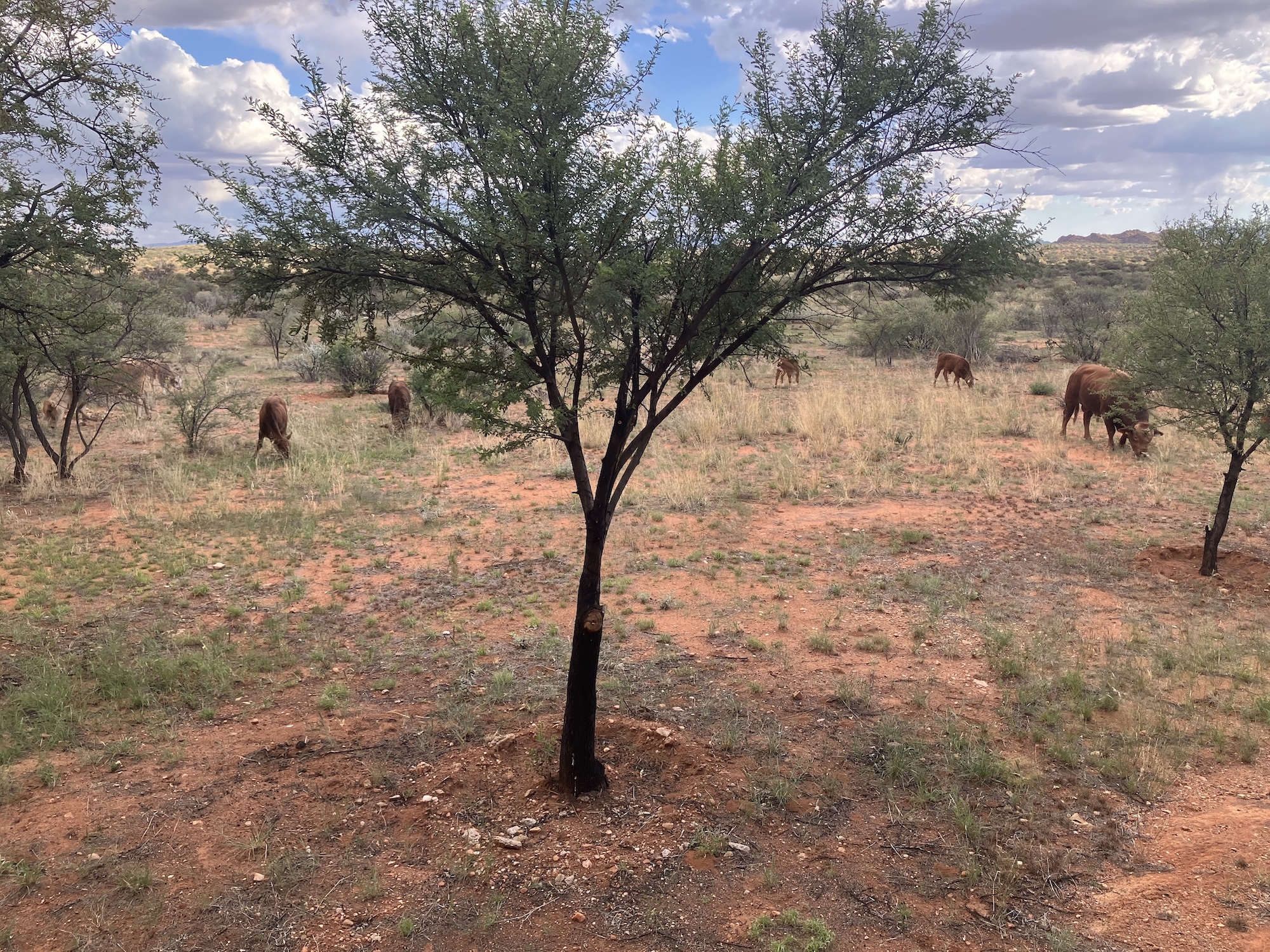
The H.E.S.S. telescopes are located on Farm Göllschau. Besides the telescopes and other facilities, the farm is home to cattle that graze the scant vegetation, as well as various wild-living animals.

The farm is approximately a 2-hour drive from Namibia’s capital Windhoek, along the C26 road. Access to the site is restricted and tours are by arrangement only. More information on to how visit the H.E.S.S. site can be found on the Contact page.

Namibia is well-known for its low light pollution and hence very dark skies, providing excellent conditions for astronomical observations. In addition, the dry climate leads to a low degree of cloud cover. On average, H.E.S.S. collects around 1,300 hours of observation data every year.

In 2027, H.E.S.S. will be joined by another astronomical facility on Farm Göllschau, specifically the Africa Millimetre Telescope. We are looking forward to a fruitful cooperation with our new neighbours!

Facilities

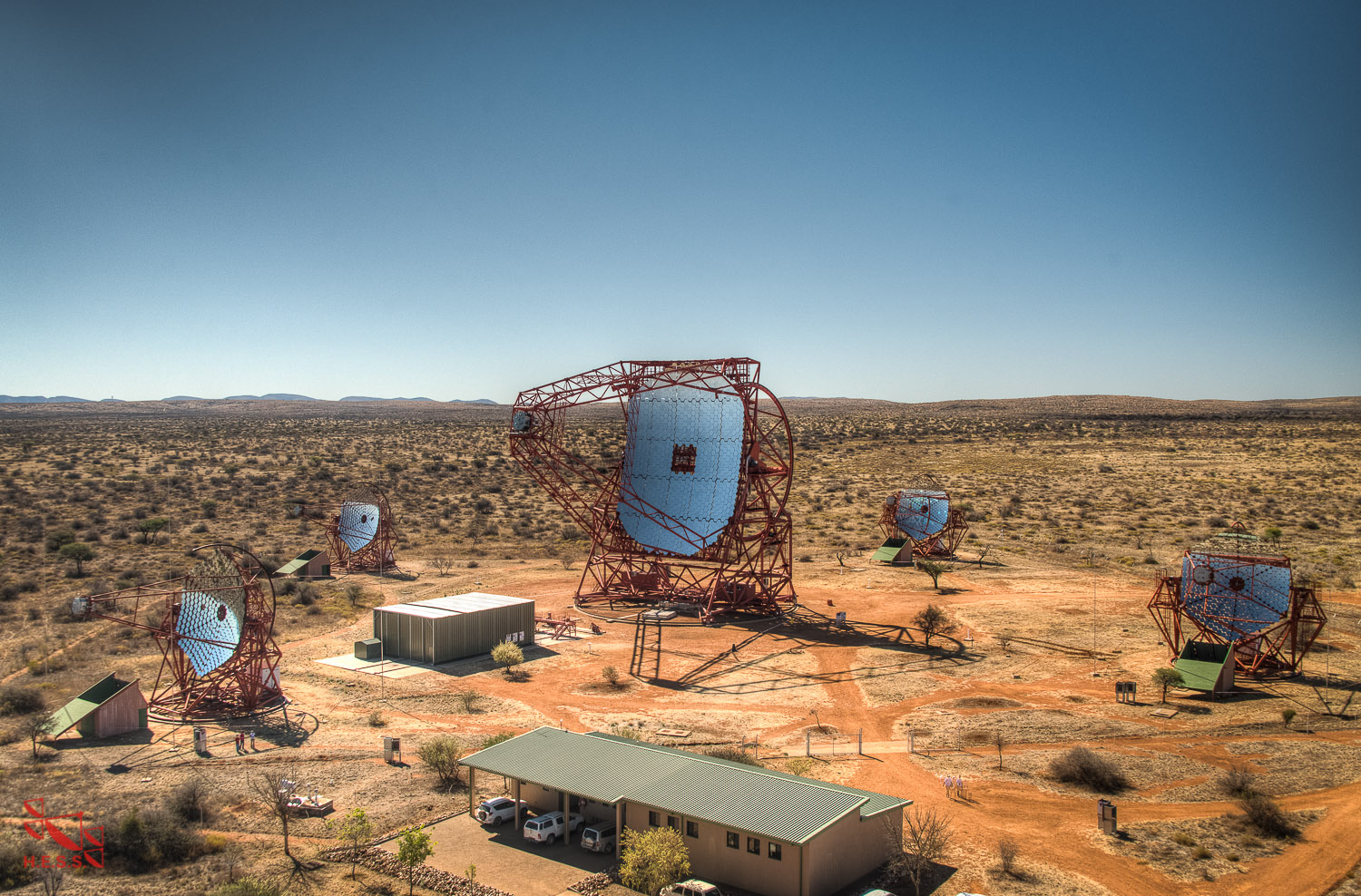
The H.E.S.S. telescope array. Image credit: Lars Mohrmann / H.E.S.S. Collaboration.

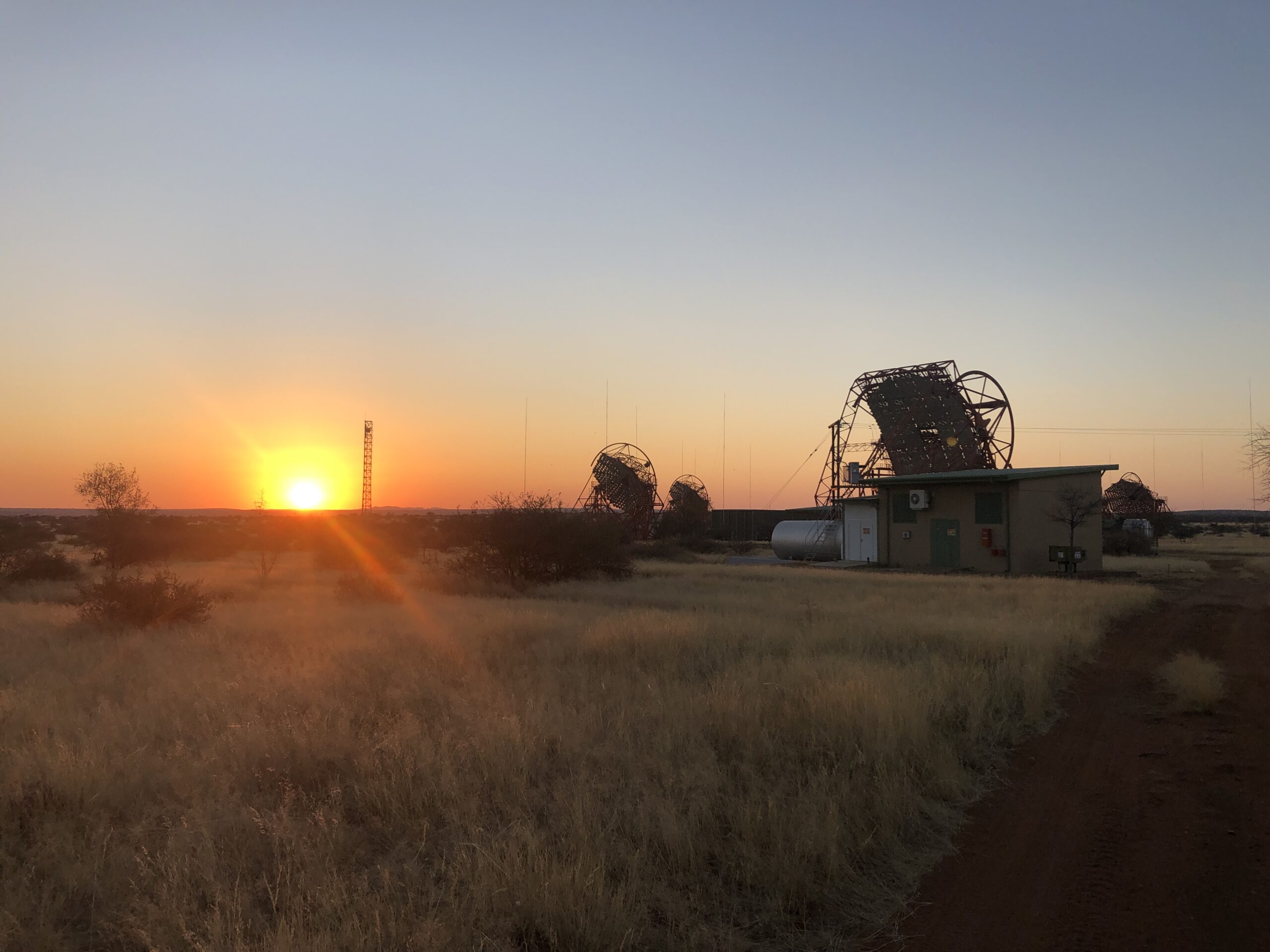
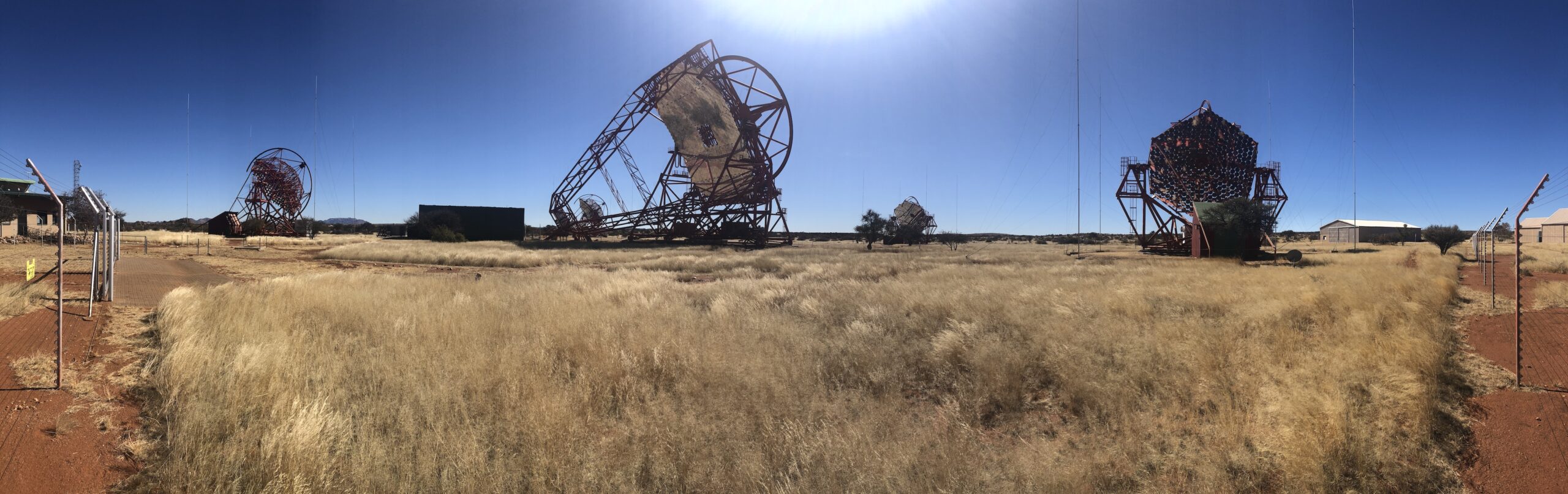
The Cherenkov telescopes are obviously the most important facility on site. They are situated in a fenced-off area, with the smaller telescopes forming a square with 120 m side length and the large telescope at the centre of the square. During the day, the telescopes are in parking position, facing South (i.e. away from the Sun).

The building next to the large CT5 telescope can be used to perform maintenance work on the camera. The building at the bottom of the image below is the control building (see tab on the left).

For more detailed information about how Cherenkov telescopes work, visit our Telescopes page.

Picture of the array with all telescopes unparked. Image credit: Christian Föhr / H.E.S.S. Collaboration.
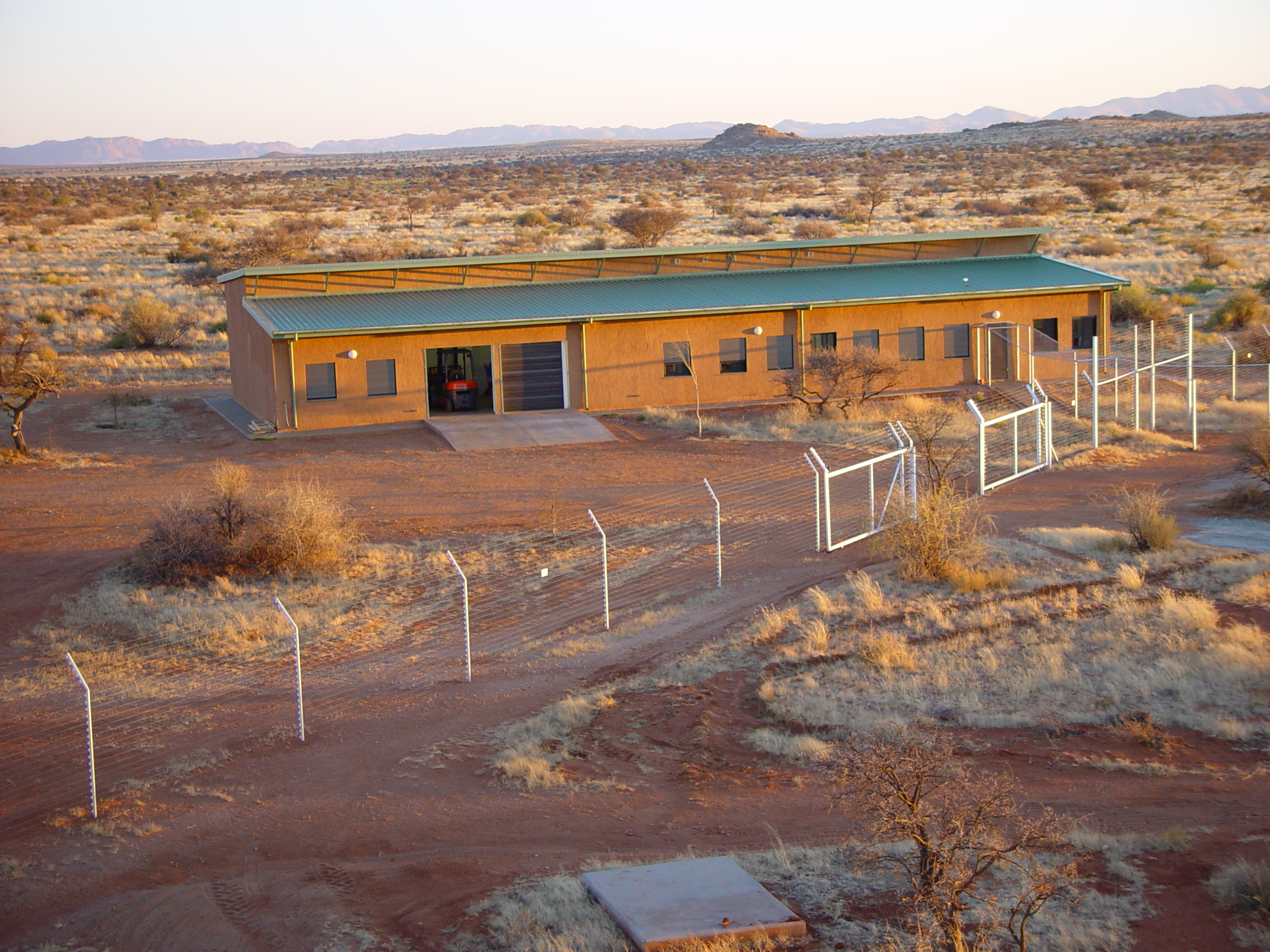
Control building at the H.E.S.S. site. Image credit: H.E.S.S. Collaboration.

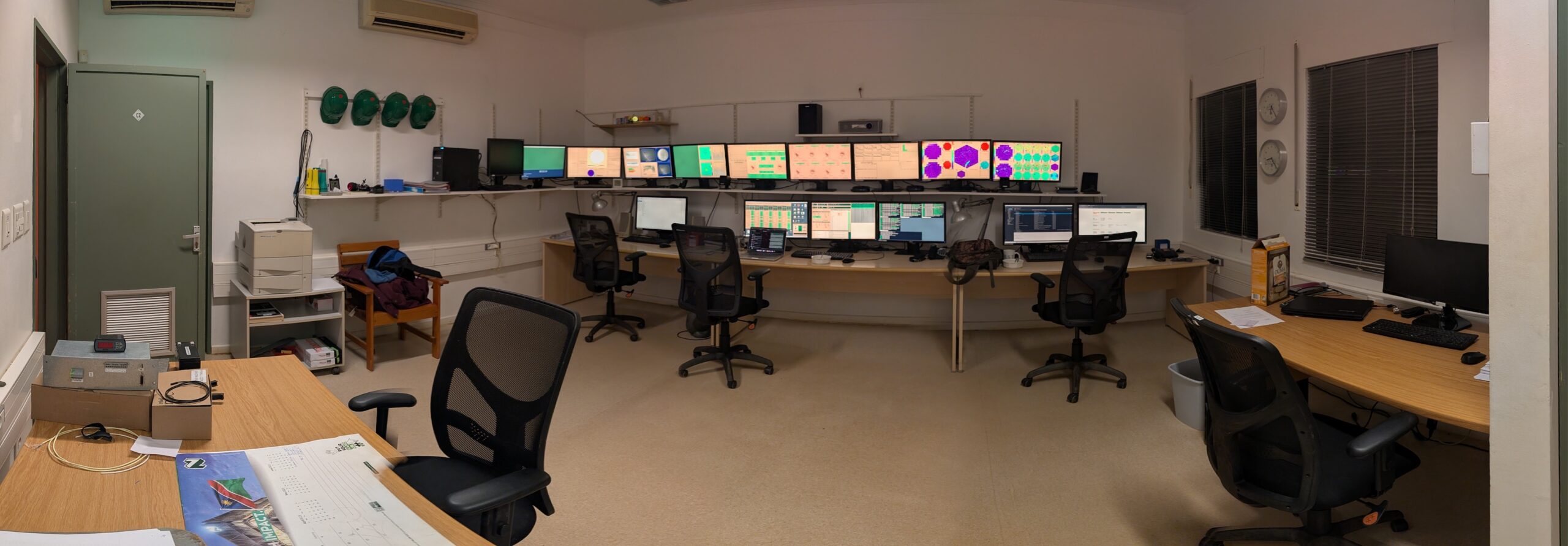
The control building is placed right next to the telescope array. It hosts offices, a work shop, and the control room (see image below). It is from this room that the telescopes are operated; during observations the control room is always occupied by two shifters. They prepare the telescopes for observations at the beginning of the night, load (and sometimes adapt) the observation schedule, react to technical issues, or perform calibration measurements. At the end of the night, they make sure to park the telescopes safely again.

Some shifters work permanently at the H.E.S.S. site, others travel to Namibia from their home institutes to do the shift work for one month, between two full moons.

H.E.S.S. control room. Image credit: Julia de Assis Scarpin / H.E.S.S. Collaboration.
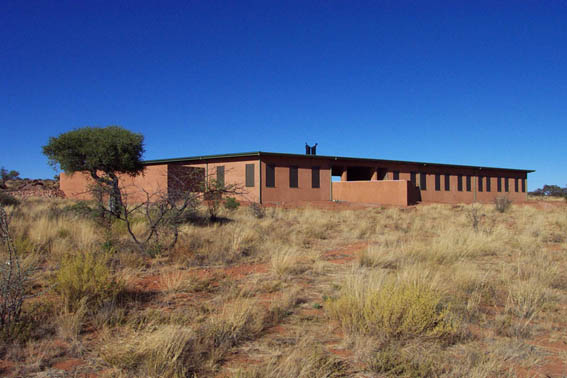
H.E.S.S. residence building. Image credit: H.E.S.S. Collaboration.

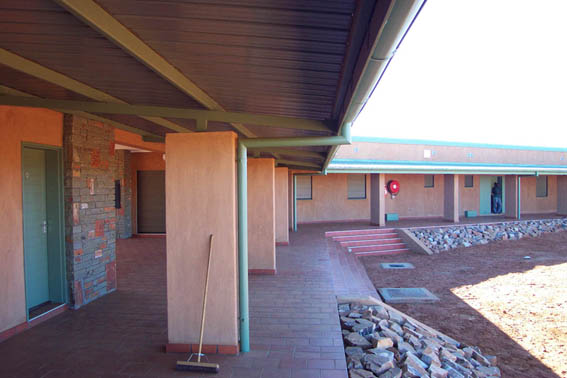
The residence building provides accommodation for everyone working on the H.E.S.S. site. It provides living quarters for the local site crew as well as rooms for members of the Collaboration that visit the site, for example to carry out observation shifts. In addition, the residence features a kitchen and a common dining room. The residence building is located at 5-10 minute walking distance from the telescopes

H.E.S.S. residence building. Image credit: H.E.S.S. Collaboration.
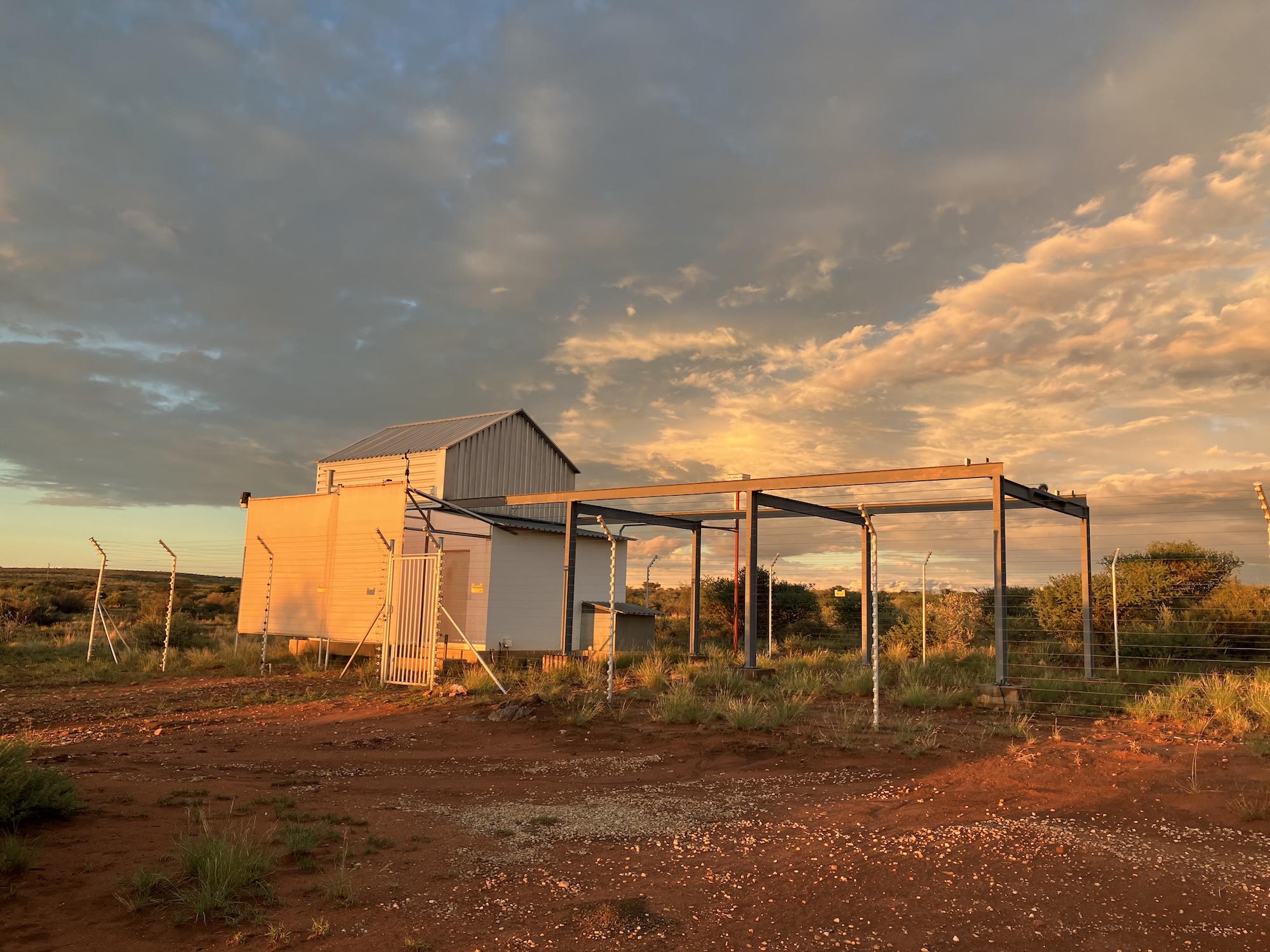
Hut containing the optical ATOM telescope. Image credit: Abhay Mehta / H.E.S.S. Collaboration.

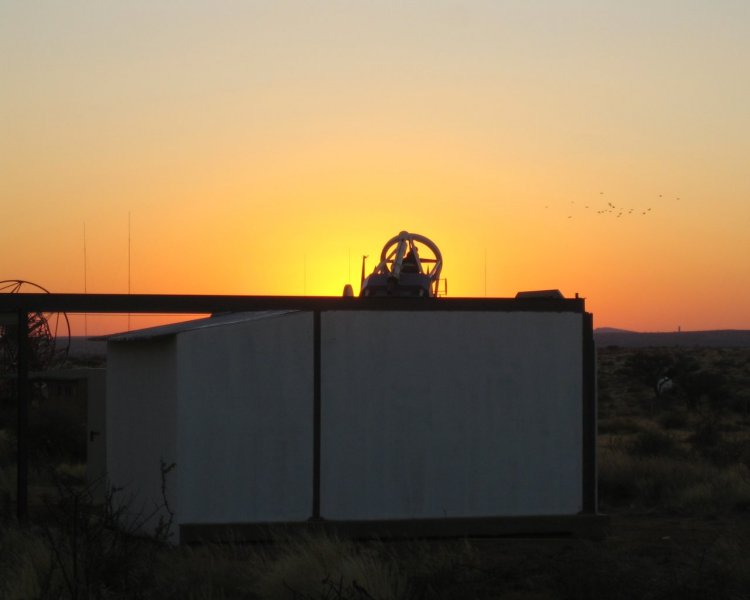
ATOM is short for Automatic Telescope for Optical Monitoring. As the name suggests, it is an optical telescope that can be operated remotely and that provides valuable multi-wavelength information for H.E.S.S. gamma-ray observations. Because it is located just a few hundred meters from the H.E.S.S. telescopes, ATOM is subject to the same weather conditions, which guarantees that it can observe whenever H.E.S.S. can.

For more information about ATOM and its capabilities, please visit the associated Source of the Month article (SOM 2020/05).

ATOM with the hut rooftop removed, so that the telescope is visible. Image credit: H.E.S.S. Collaboration.
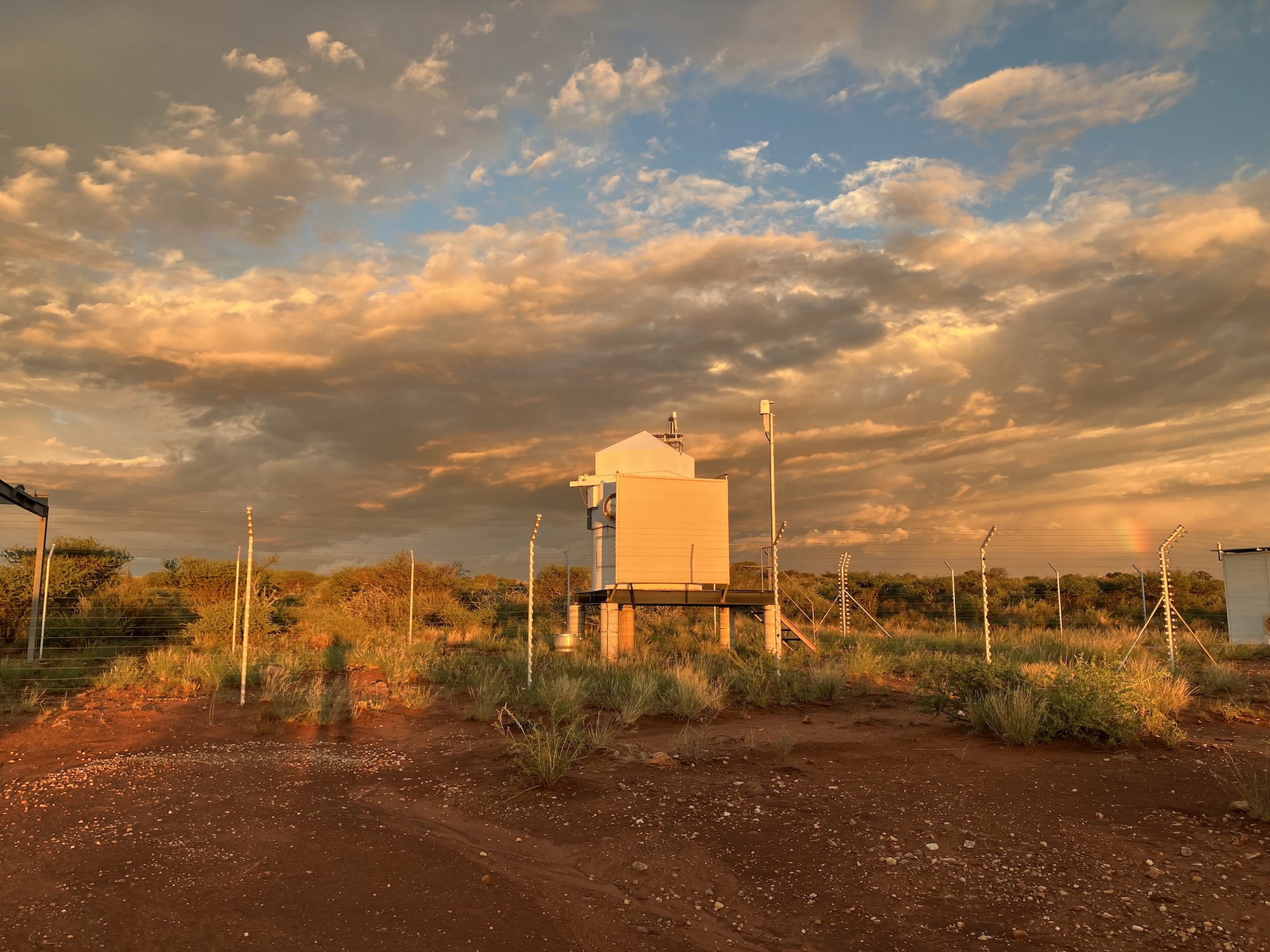
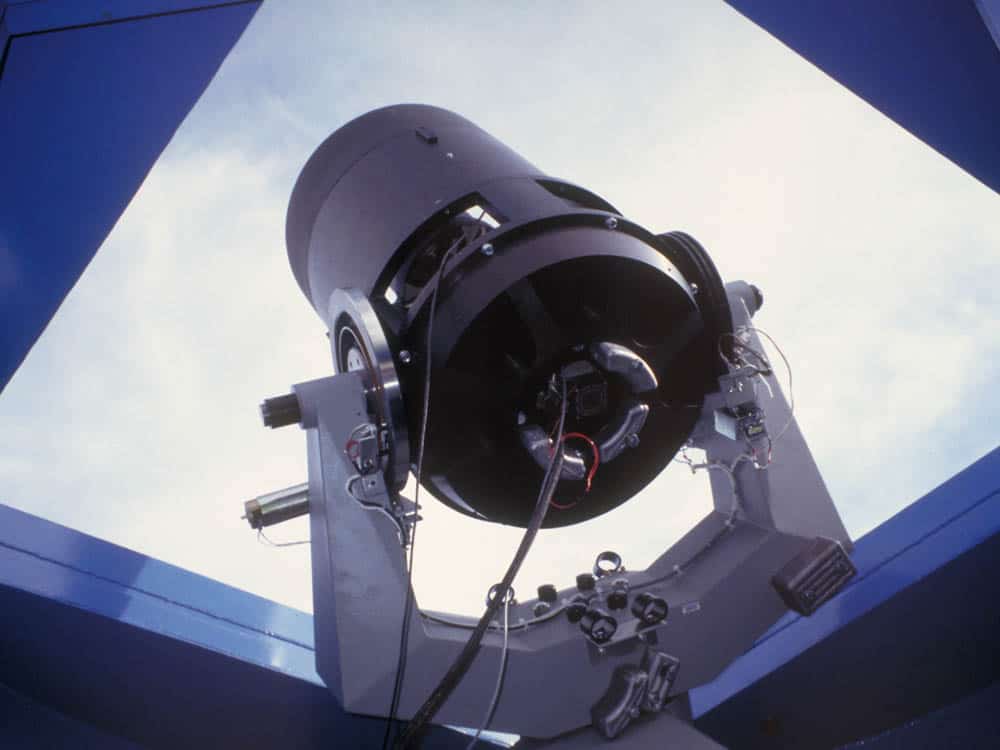
Image of the ROTSE telescope hut. Image credit: Abhay Mehta / H.E.S.S. Collaboration.

The Robotic Optical Transient Search Experiment (ROTSE, www.rotse.net) was a network of four robotic optical telescopes that were designed to monitor the sky and detect transient events, such as gamma-ray bursts. One of the telescopes was (and still is) located at the H.E.S.S. site (the other ones were in Australia, Turkey, and the US). While the network was decommissioned in 2013, the telescope in Namibia was never dismantled. In 2022, the African Astronomical Society (AfAS) decided to refurbish the Namibian ROTSE telescope and put it back into operation.

The ROTSE optical telescope. Image credit: ROTSE.