Unveiling extended gamma-ray emission around HESS J1813-178

Abstract

Context. HESS J1813–178 is a very-high-energy γ-ray source spatially coincident with the young and energetic pulsar PSR J1813–1749 and thought to be associated with its pulsar wind nebula (PWN). Recently, evidence for extended high-energy emission in the vicinity of the pulsar has been revealed in the Fermi Large Area Telescope (LAT) data. This motivates revisiting the HESS J1813–178 region, taking advantage of improved analysis methods and an extended dataset.

Aims. Using data taken by the High Energy Stereoscopic System (H.E.S.S.) experiment and the Fermi-LAT, we aim to describe the γ-ray emission in the region with a consistent model, to provide insights into its origin.

Methods. We performed a likelihood-based analysis on 32 hours of H.E.S.S. data and 12 yr of Fermi-LAT data and we fitted a spectro-morphological model to the combined datasets. These results allowed us to develop a physical model for the origin of the observed γ-ray emission in the region.

Results. In addition to the compact very-high-energy γ-ray emission centred on the pulsar, we find a significant yet previously undetected component along the Galactic plane. With Fermi-LAT data, we confirm extended high-energy emission consistent with the position and elongation of the extended emission observed with H.E.S.S. These results establish a consistent description of the emission in the region from GeV energies to several tens of TeV.

Conclusions. This study suggests that HESS J1813–178 is associated with a γ-ray PWN powered by PSR J1813–1749. A possible origin of the extended emission component is inverse Compton emission from electrons and positrons that have escaped the confines of the pulsar and form a halo around the PWN.
Auxiliary informations

Figure 1:
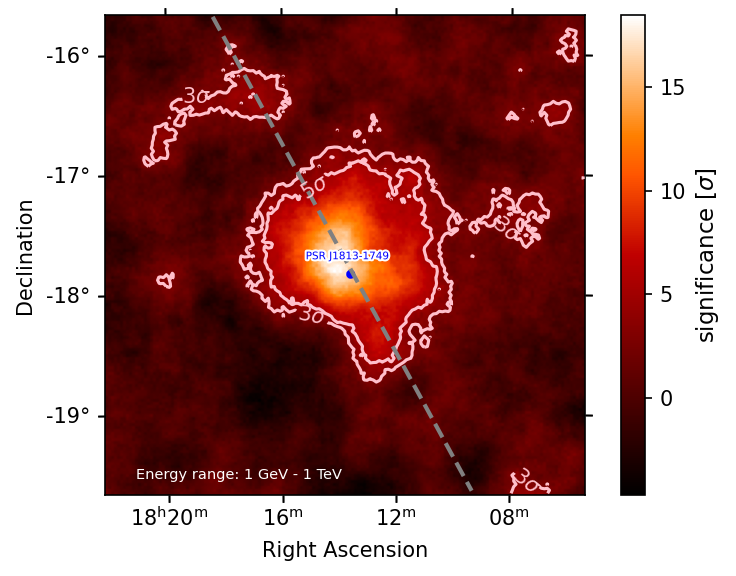
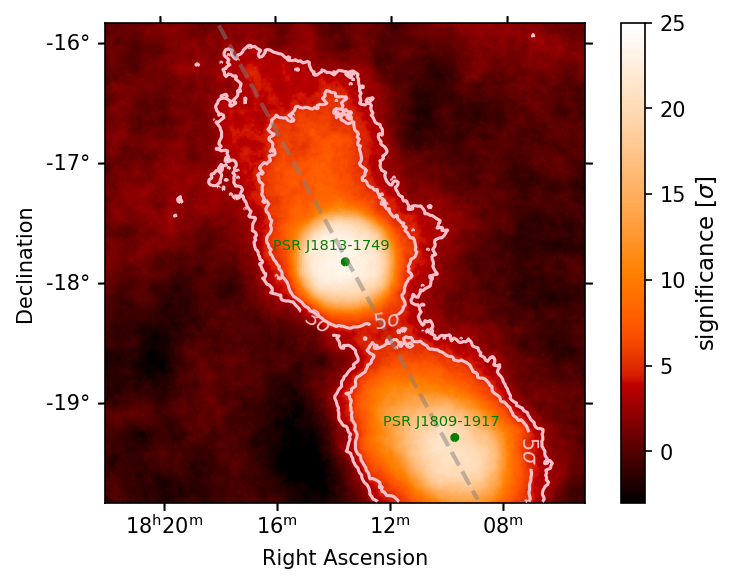
Significance map:
Significance Map of the H.E.S.S. Data
[PDF], [FITS]

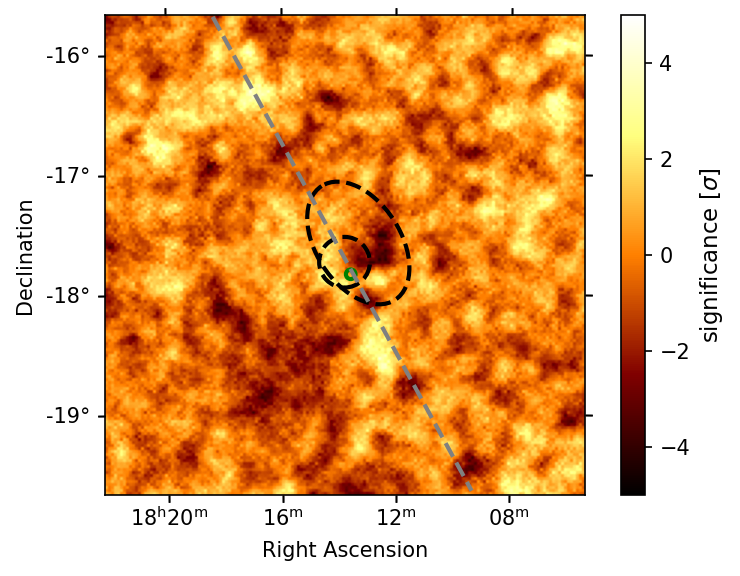
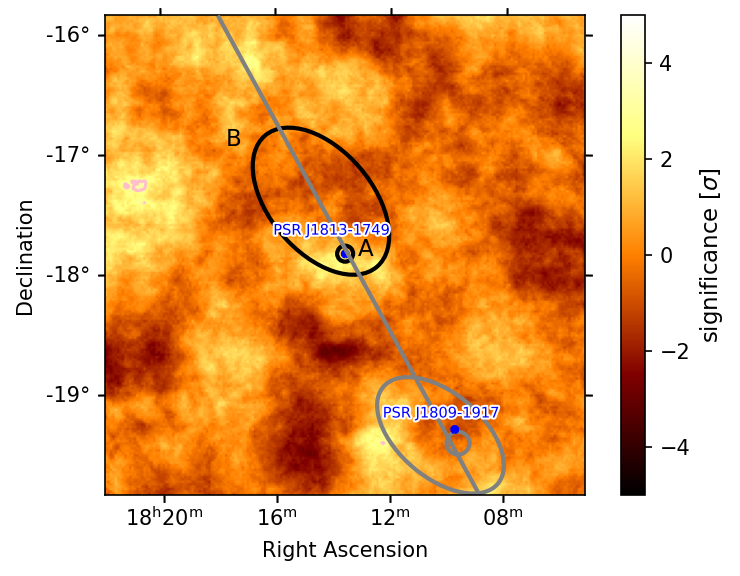
Significance map after model fit:
Significance Map after the fit
[PDF], [Model]

Figure 2:
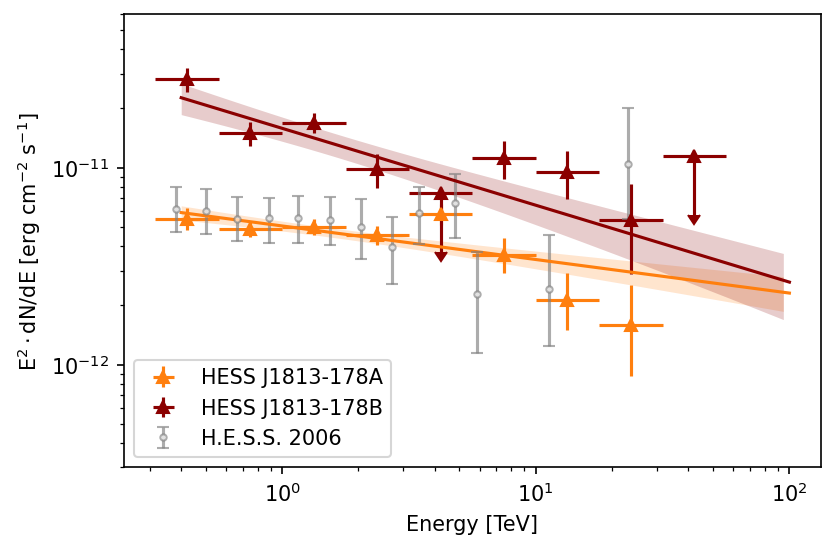
SED derived from the analysis of the H.E.S.S. data:

[PDF]
Associated data files: [FITS (A)], [FITS (B)]

Figure 3:
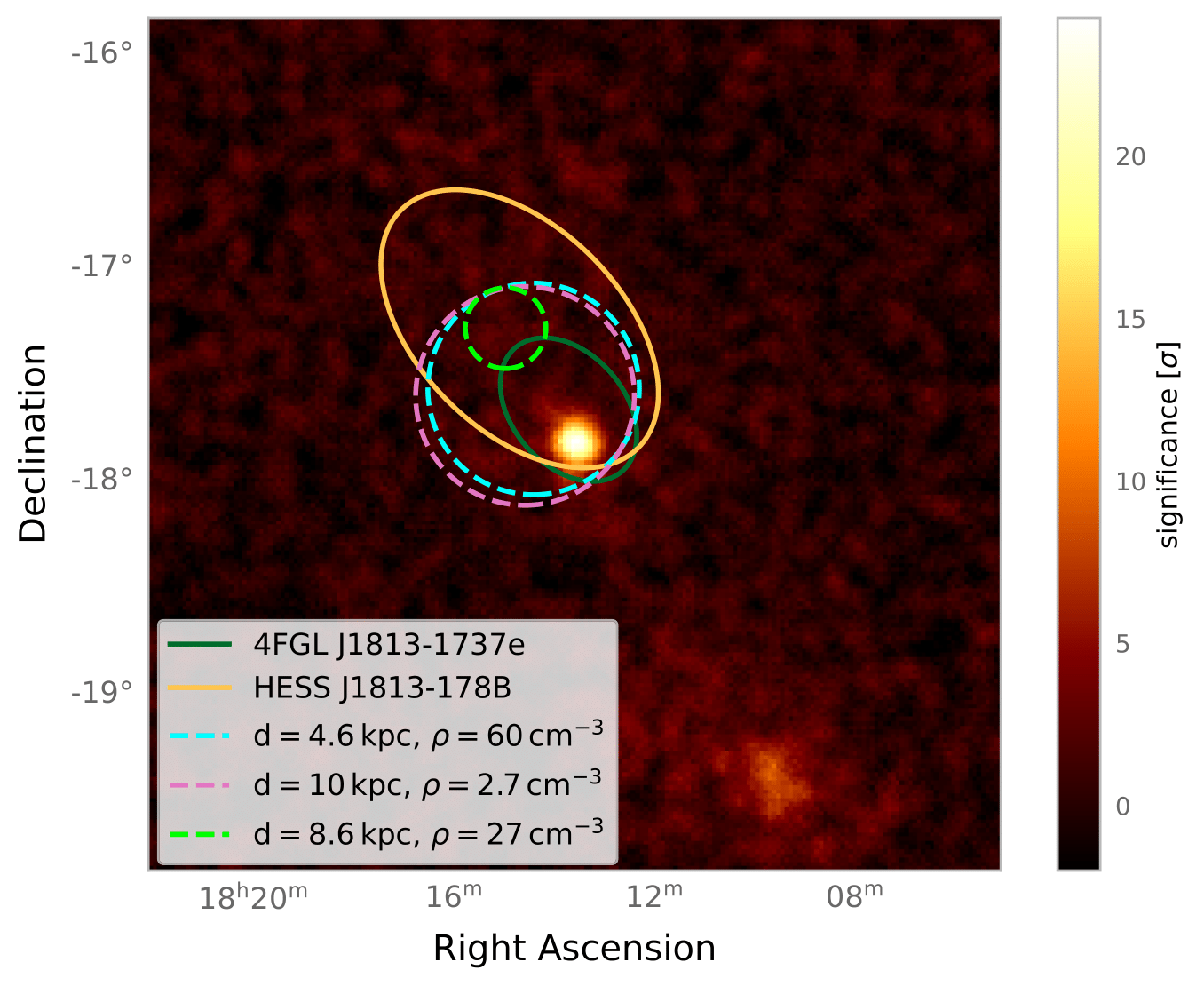
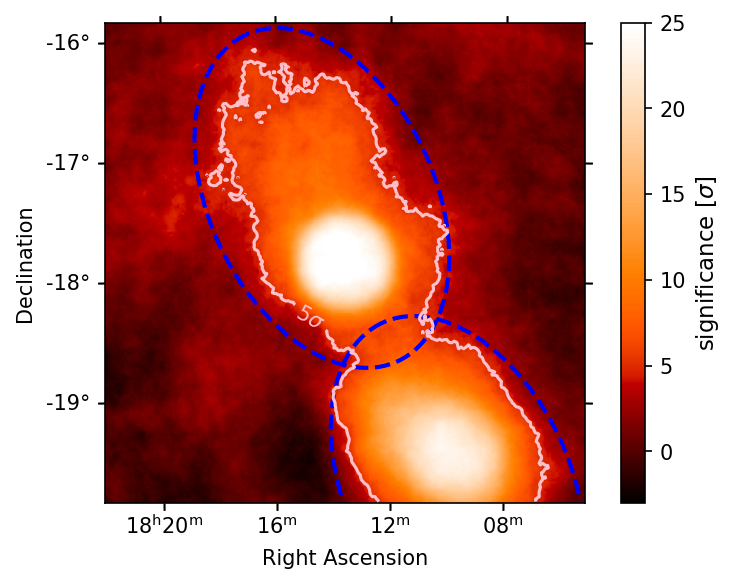
Significance map:
Significance Map of the Fermi-LAT data
[PDF], [FITS]

Significance map after model fit:
Significance Map after the fit
[PDF], [Model]

Figure 4:
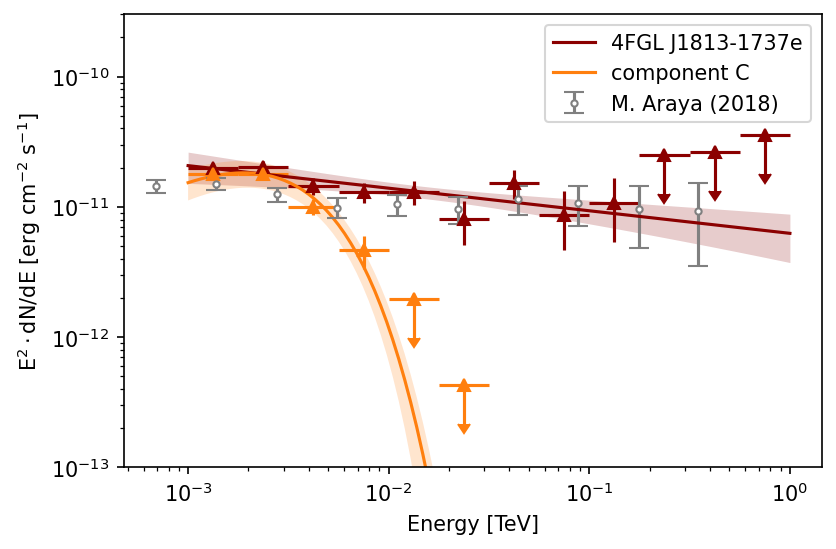
SED derived from the analysis of the Fermi-LAT data:

[PDF]
Associated data files: [FITS (4FGL)], [FITS (C)]

Figure 5:
Energy dependent morphology:

[PDF]

Figure 6:
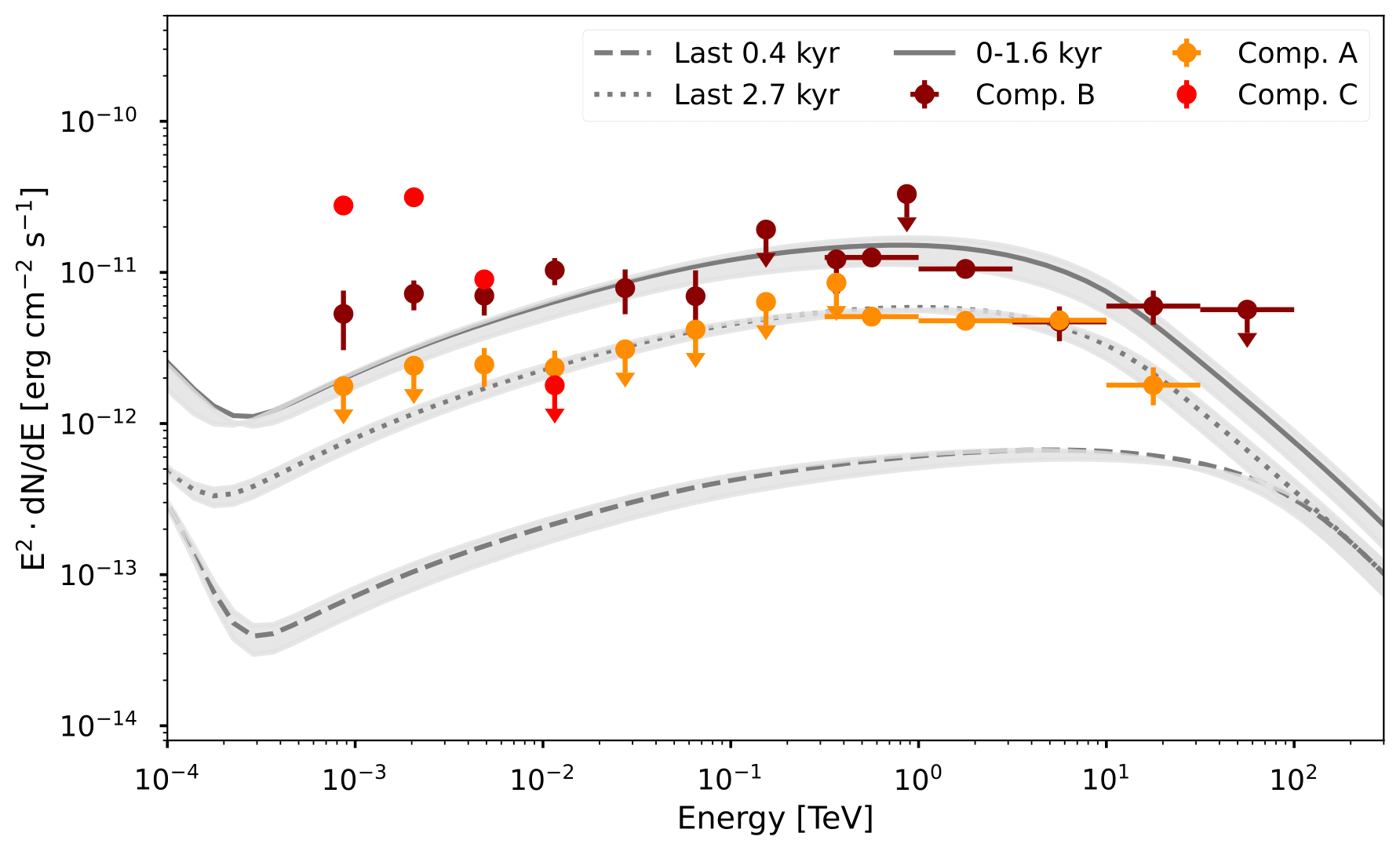
SED derived from the joint fit:

[PDF]
SED Component A: [FITS (HESS)], [FITS (Fermi)]
SED Component B: [FITS (HESS)], [FITS (Fermi)]
SED Component C: [FITS]
Model parameter: [YAML (HESS)], [YAML (Fermi)]

Figure 7:
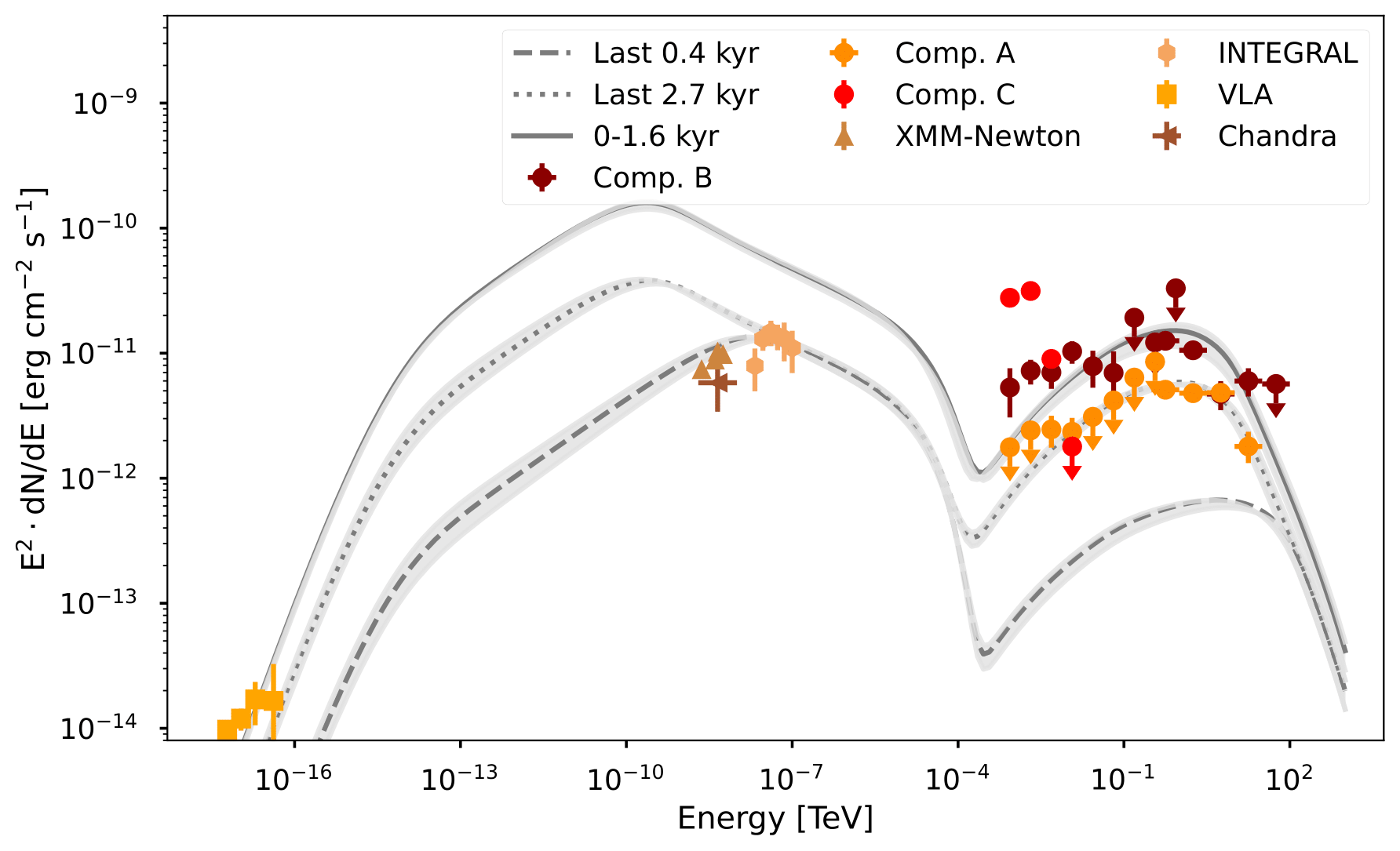
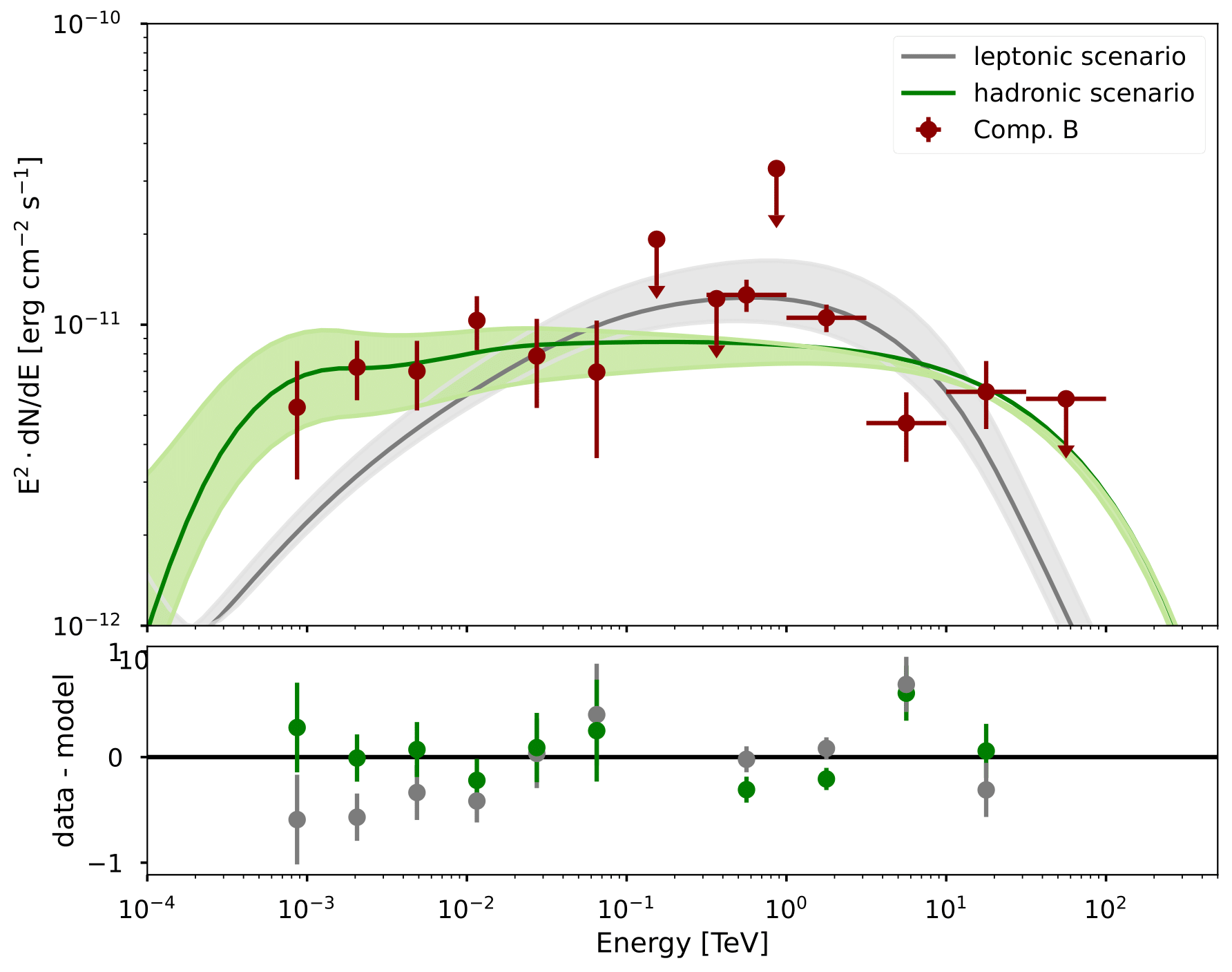
Spectral energy distribution for the leptonic model:

[PDF]

[PDF]

Figure 8:
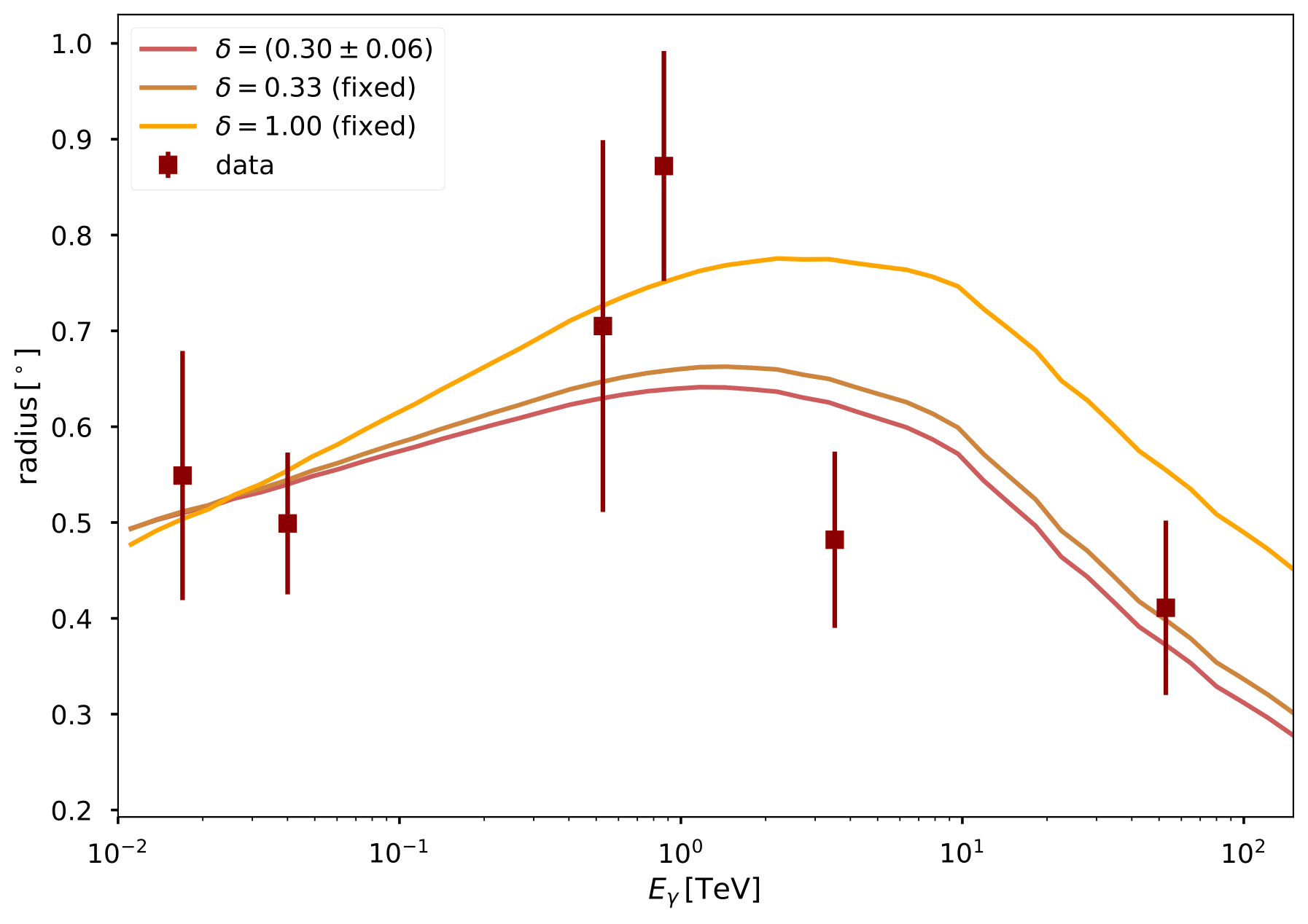
Measured and predicted radius of HESS J1813-178B:

[PDF]

Figure 9:
Molecular clouds in the region:

[PDF]
Counts map of the H.E.S.S. data: [FITS]

Figure 10:
Energy loss time:

[PDF]

Appendix

Figure A1:
Exclusion Region for the background fit

[PDF]

Figure A3:
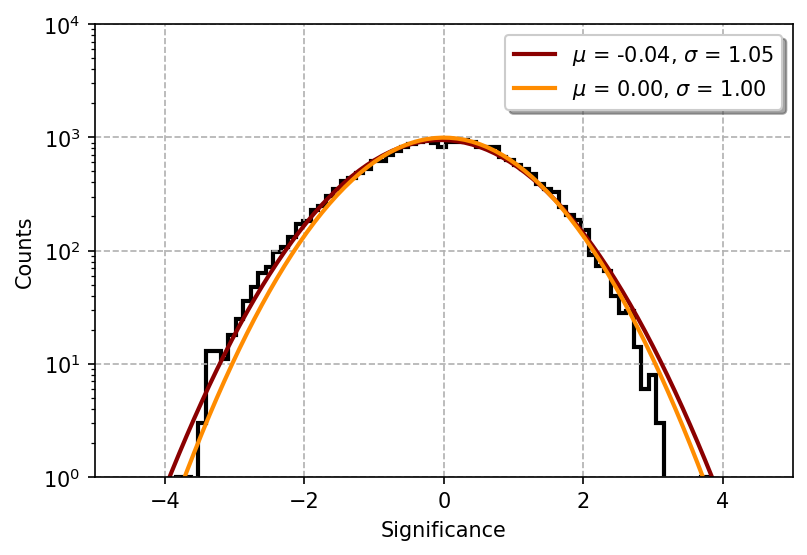
Significance distribution of the emission outside of the exclusion regions

[PDF]

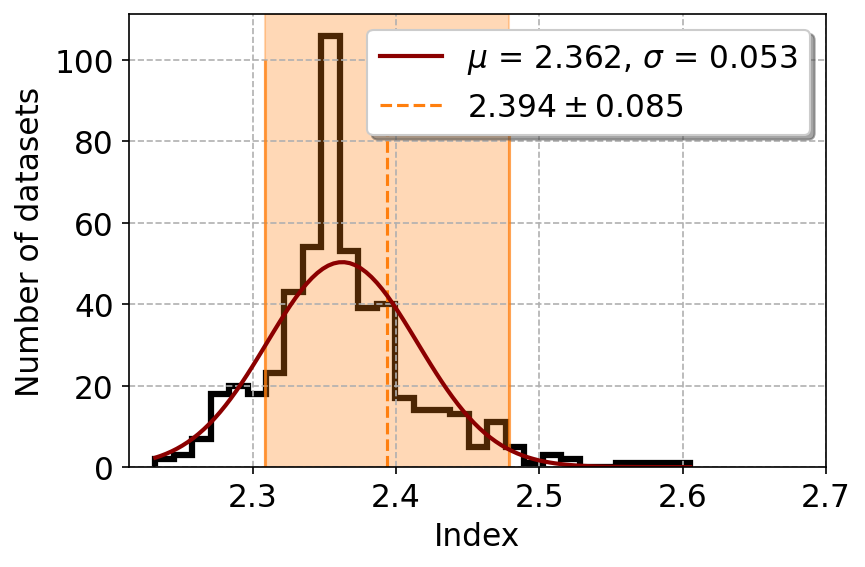
Figure B1:
Distribution of the best-fit values of the spectral index for HESS J1813-178B

[PDF]

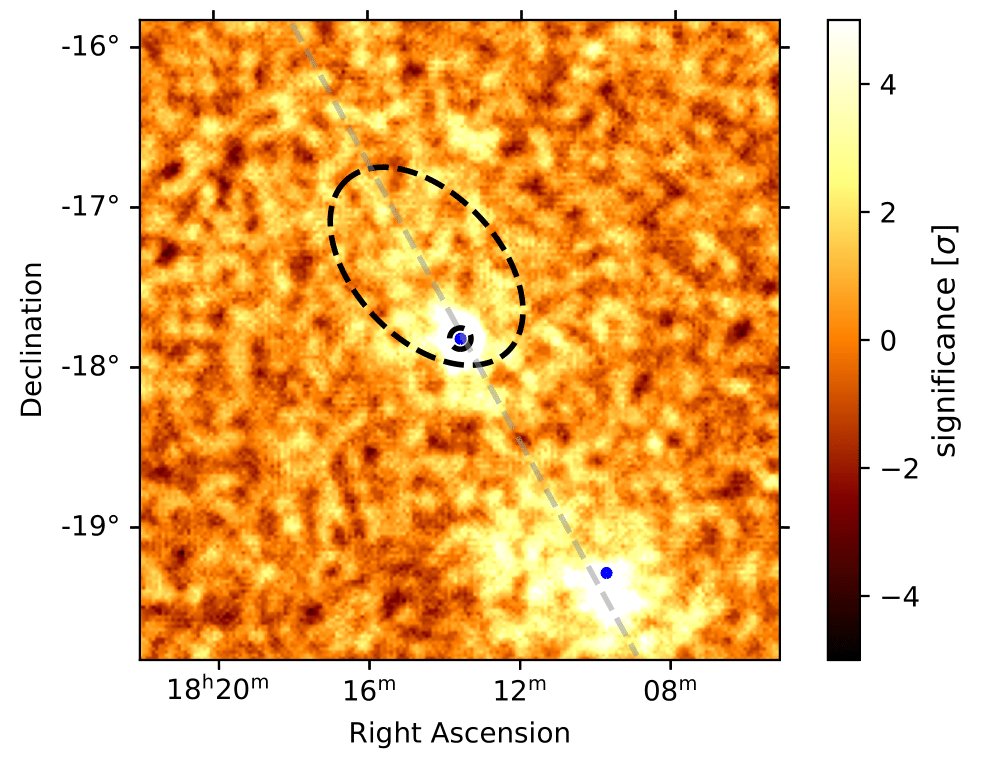
Figure C1:
Significance map of the emission seen by H.E.S.S. with an Correlation radius of 0.06 deg

[PDF]

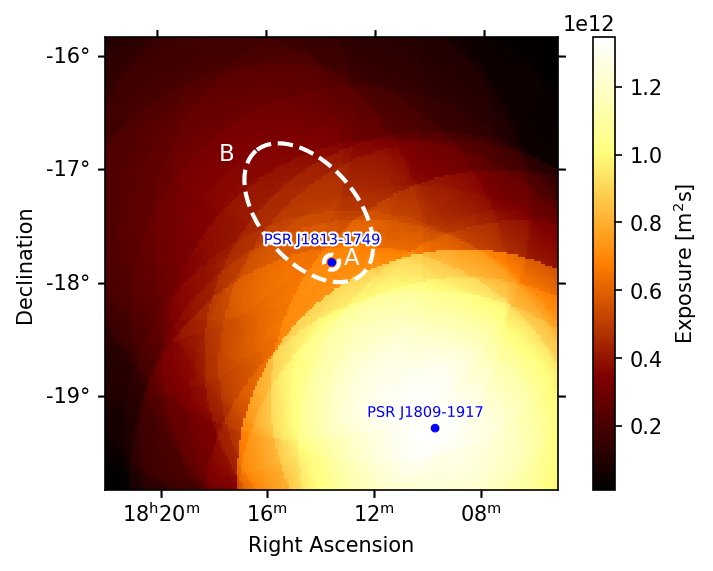
Figure C2:
Exposure of the H.E.S.S. dataset

[PDF]

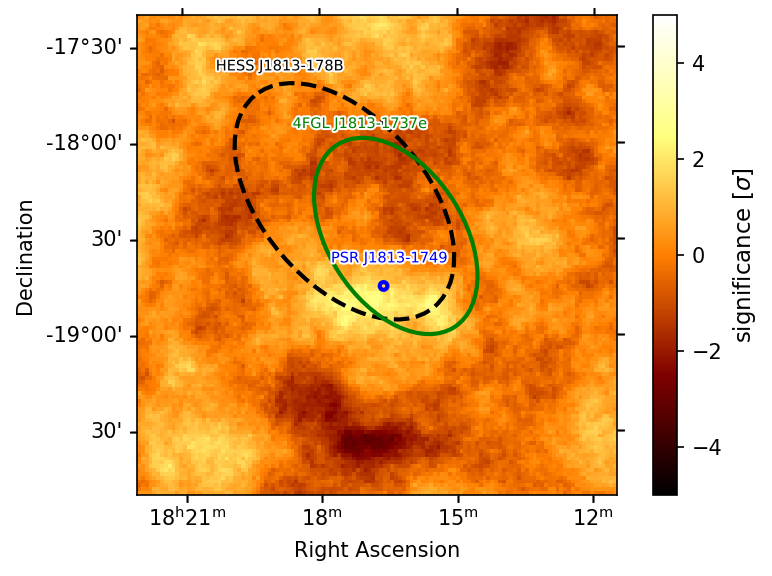
Figure E1:
Comparison of the best-fit models found in the analysis of H.E.S.S. and Fermi-LAT data

[PDF]

Figure E2:
Comparison of the gamma-ray emission with the position of the radio emission from G012.8-00.0

[PDF]

Figure E3:
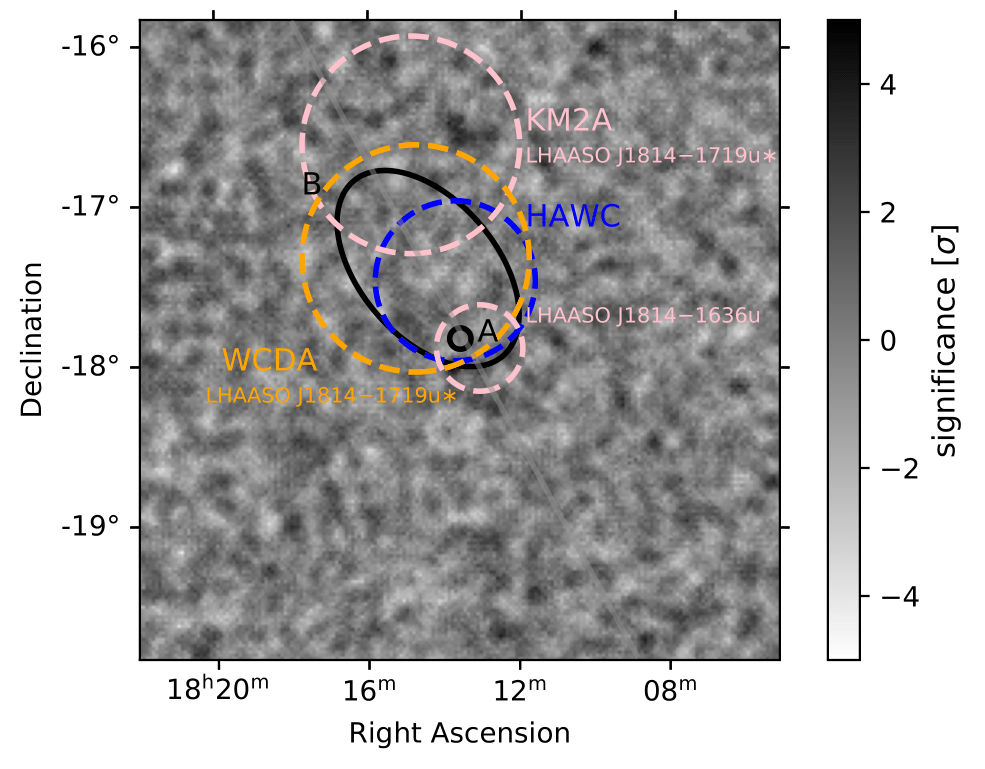
Comparison of the best-fit position with the results obtained by HAWC and LHAASO

[PDF]

Figure E3:
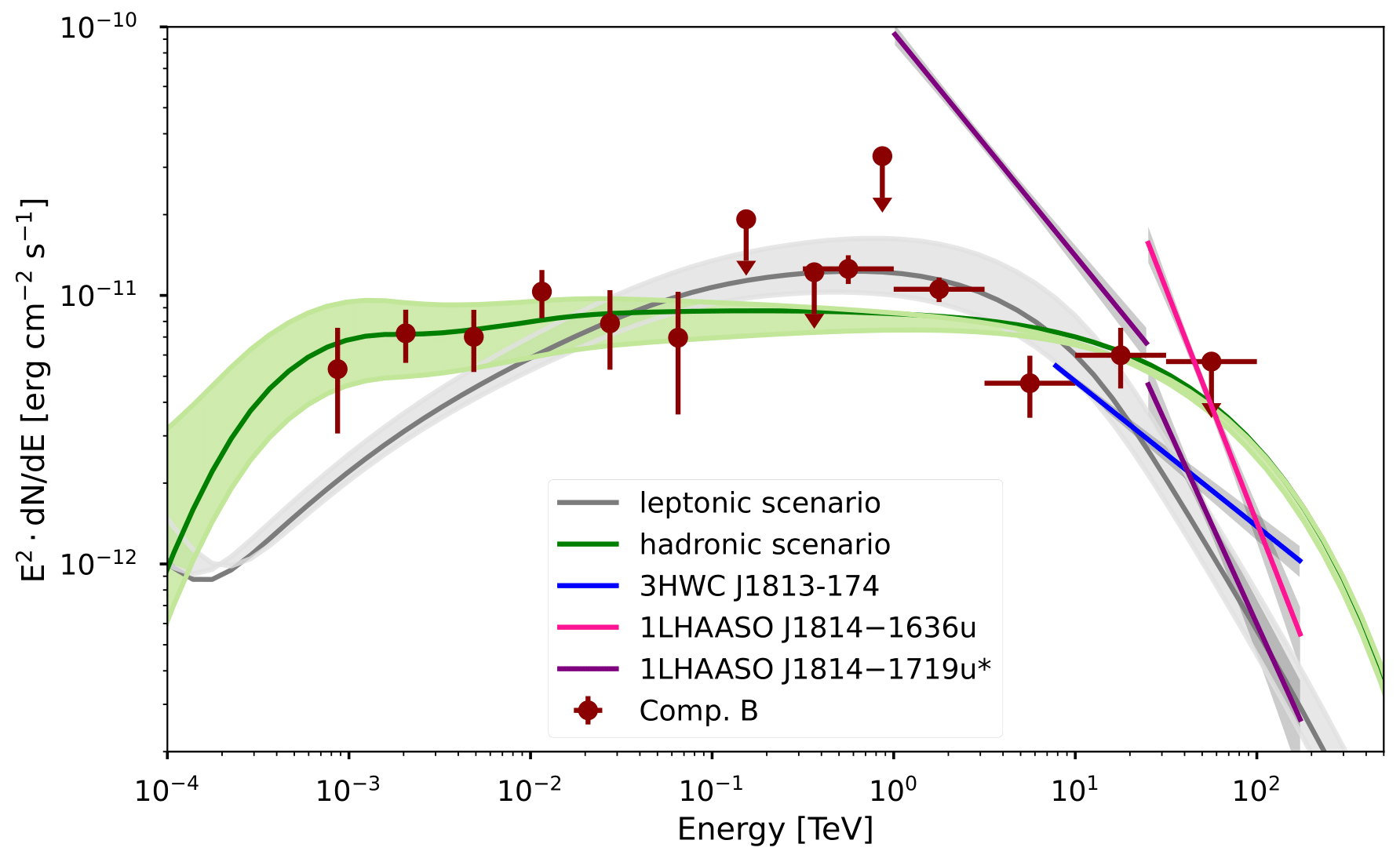
Comparison of the SED for the leptonic and hadronic model to the spectra derived by LHAASO

[PDF]

Collaboration Acknowledgement

The support of the Namibian authorities and of the University of Namibia in facilitating the construction and operation of H.E.S.S. is gratefully acknowledged, as is the support by the German Ministry for Education and Research (BMBF), the Max Planck Society, the German Research Foundation (DFG), the Helmholtz Association, the Alexander von Humboldt Foundation, the French Ministry of Higher Education, Research and Innovation, the Centre National de la Recherche Scientifique (CNRS/IN2P3 and CNRS/INSU), the Commissariat à l’Énergie atomique et aux Énergies alternatives (CEA), the U.K. Science and Technology Facilities Council (STFC), the Irish Research Council (IRC) and the Science Foundation Ireland (SFI), the Knut and Alice Wallenberg Foundation, the Polish Ministry of Education and Science, Agreement no. 2021/WK/06, the South African Department of Science and Technology and National Research Foundation, the University of Namibia, the National Commission on Research, Science & Technology of Namibia (NCRST), the Austrian Federal Ministry of Education, Science and Research and the Austrian Science Fund (FWF), the Australian Research Council (ARC), the Japan Society for the Promotion of Science, the University of Amsterdam and the Science Committee of Armenia grant 21AG-1C085. We appreciate the excellent work of the technical support staff in Berlin, Zeuthen, Heidelberg, Palaiseau, Paris, Saclay, Tübingen and in Namibia in the construction and operation of the equipment. This work benefited from services provided by the H.E.S.S. Virtual Organisation, supported by the national resource providers of the EGI Federation.