Geminga is an enigmatic radio-quiet γ-ray pulsar located at a mere 250 pc distance from Earth. Extended very-high-energy γ-ray emission around the pulsar was discovered by Milagro and later confirmed by HAWC, which are both water Cherenkov detector-based experiments. However, evidence for the Geminga pulsar wind nebula in gamma rays has long evaded detection by imaging atmospheric Cherenkov telescopes (IACTs) despite targeted observations. The detection of γ-ray emission on angular scales ≳2º poses a considerable challenge for the background estimation in IACT data analysis. With recent developments in understanding the complementary background estimation techniques of water Cherenkov and atmospheric Cherenkov instruments, the H.E.S.S. IACT array can now confirm the detection of highly extended γ-ray emission around the Geminga pulsar with a radius of at least 3º in the energy range 0.5–40 TeV. We find no indications for statistically significant asymmetries or energy-dependent morphology. A flux normalisation of (2.8 ± 0.7) × 10−12 cm−2 s−1 TeV−1 at 1 TeV is obtained within a 1º radius region around the pulsar. To investigate the particle transport within the halo of energetic leptons around the pulsar, we fitted an electron diffusion model to the data. The normalisation of the diffusion coefficient obtained of D0 = 7.6−1.2+1.5 × 1027 cm2 s−1, at an electron energy of 100 TeV, is compatible with values previously reported for the pulsar halo around Geminga, which is considerably below the Galactic average.

Main paper
Figure 1:
HAWC surface brightness profile with HESS ON and OFF regions shown schematically:
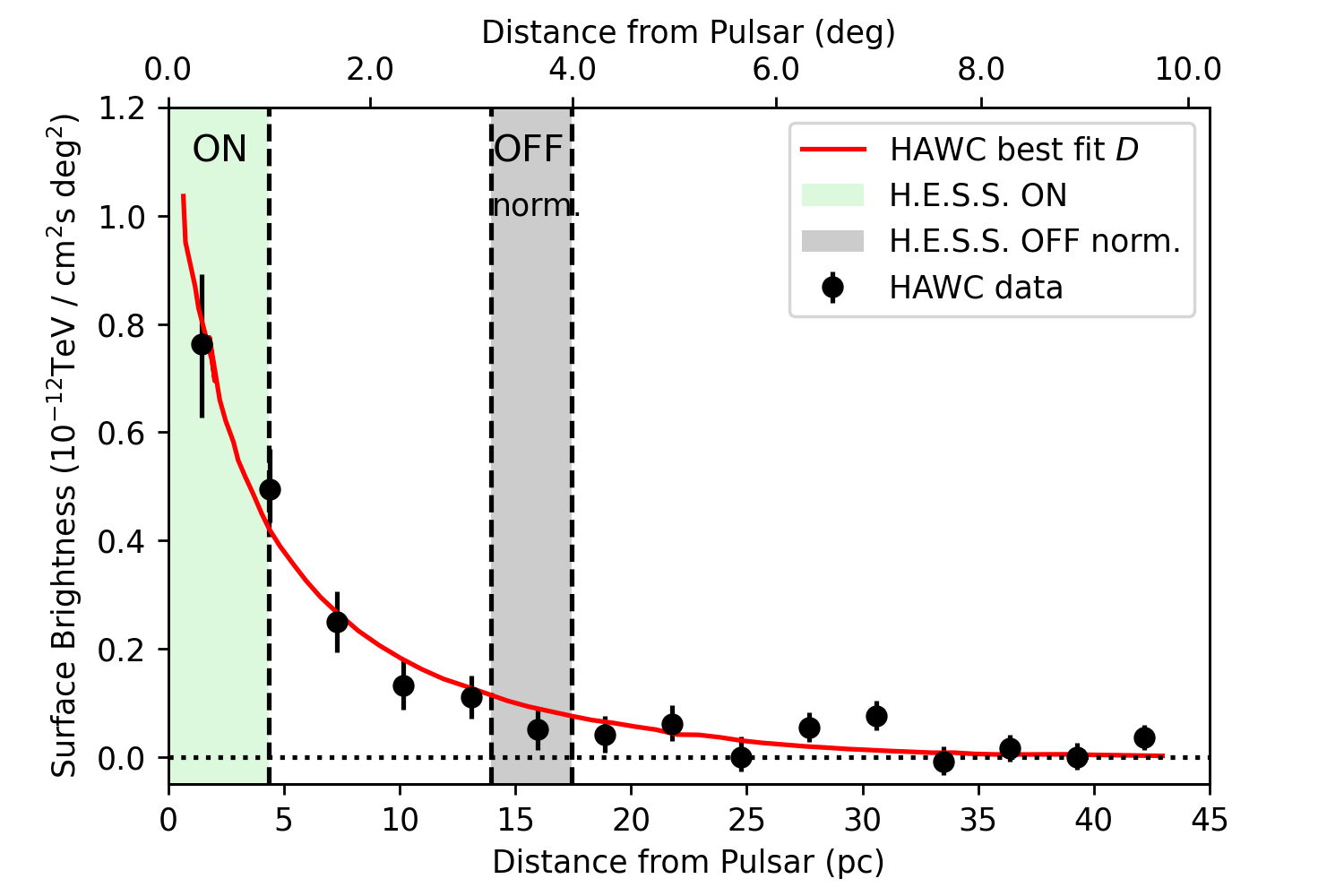
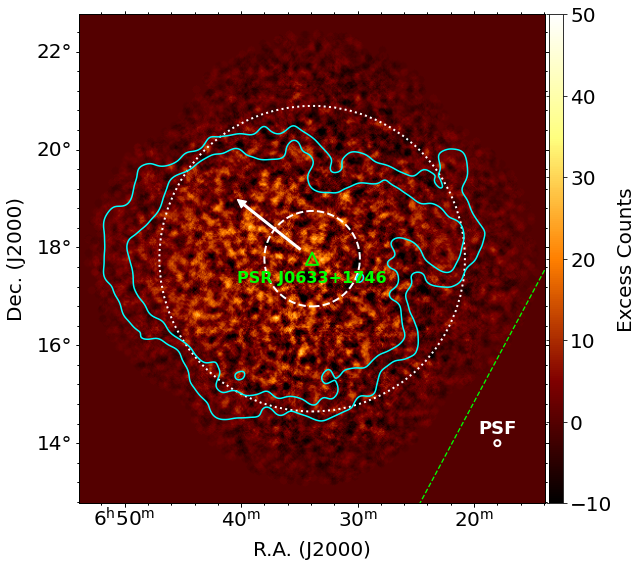
Figure 2:
Excess counts map On-Off background: [FITS]
Excess counts map field-of-view background: [FITS]
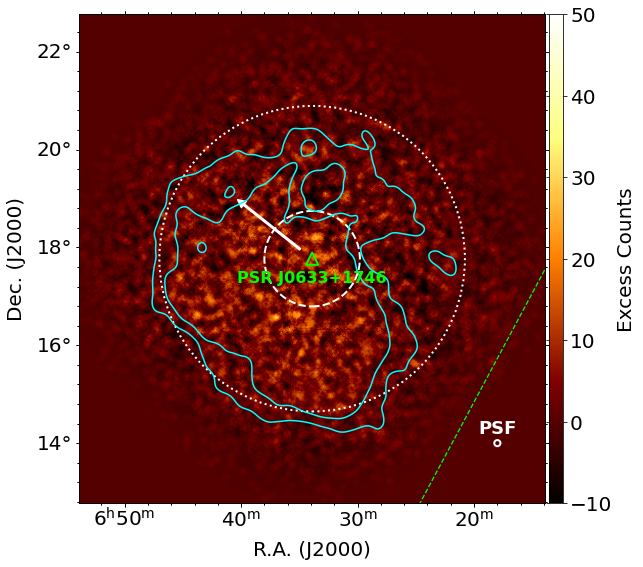
Figure 3:
Excess counts map showing observation positions:
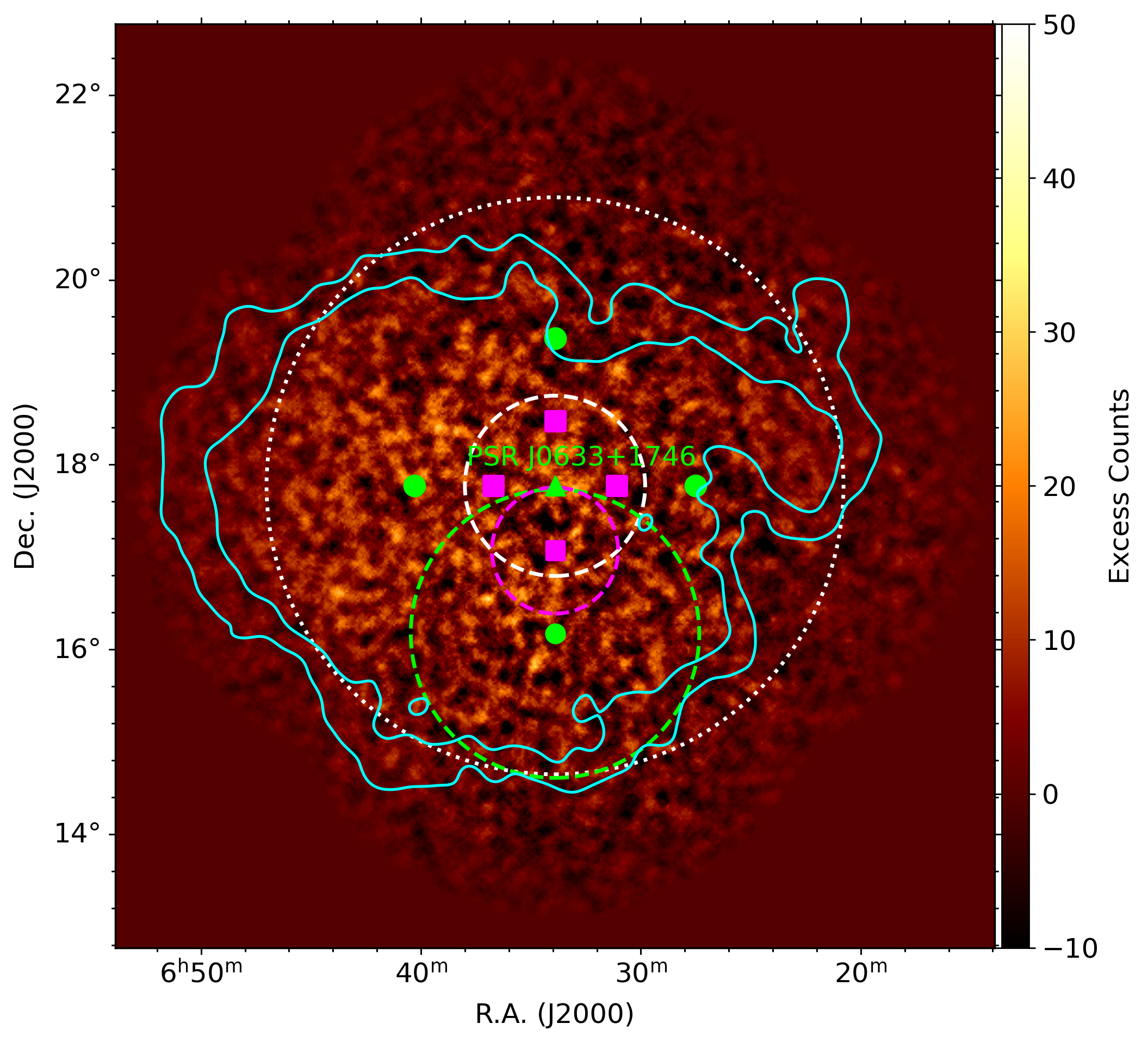
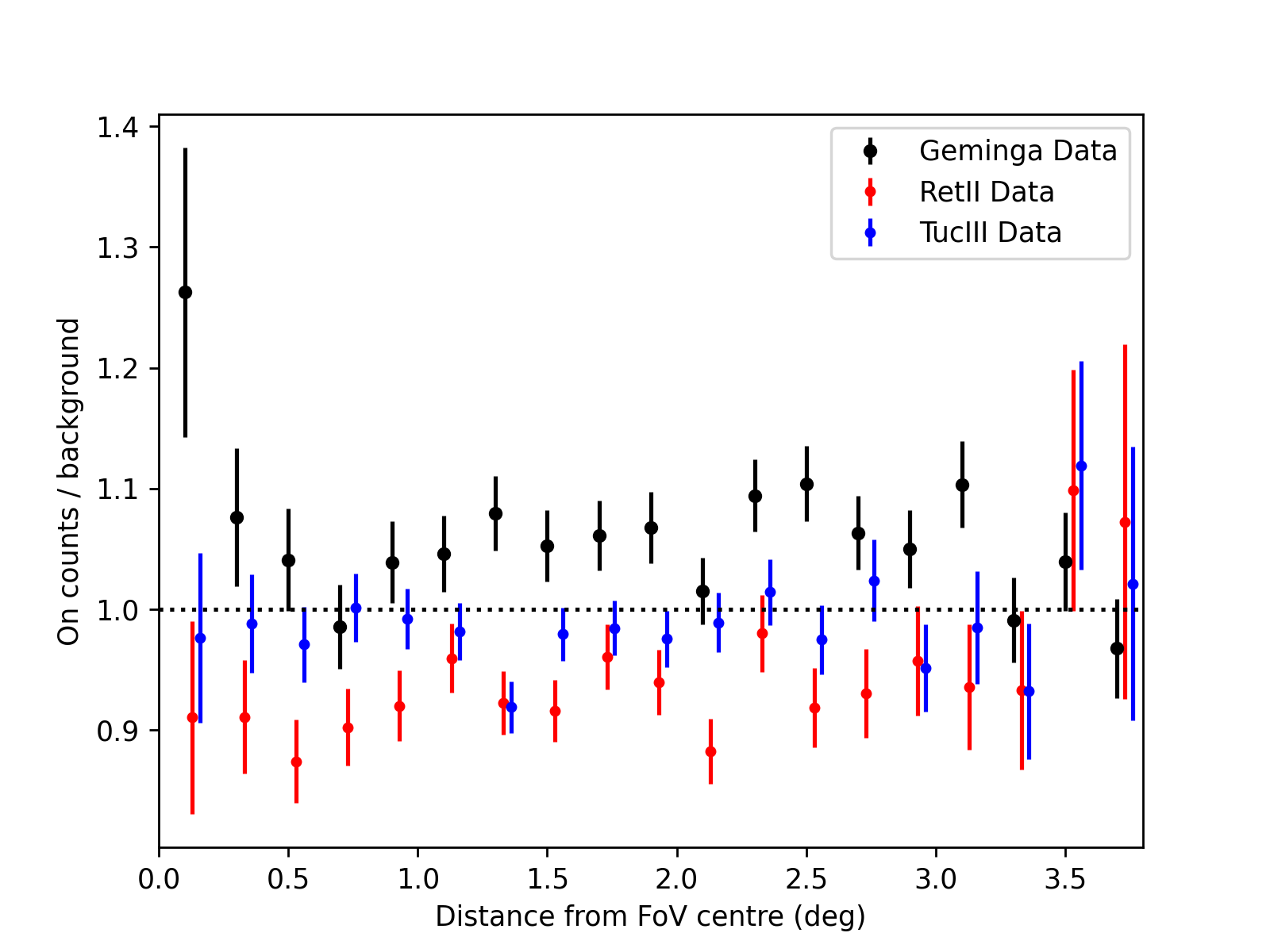
Figure 4:
Ratio of On counts to background counts:
Associated data file: [CSV]
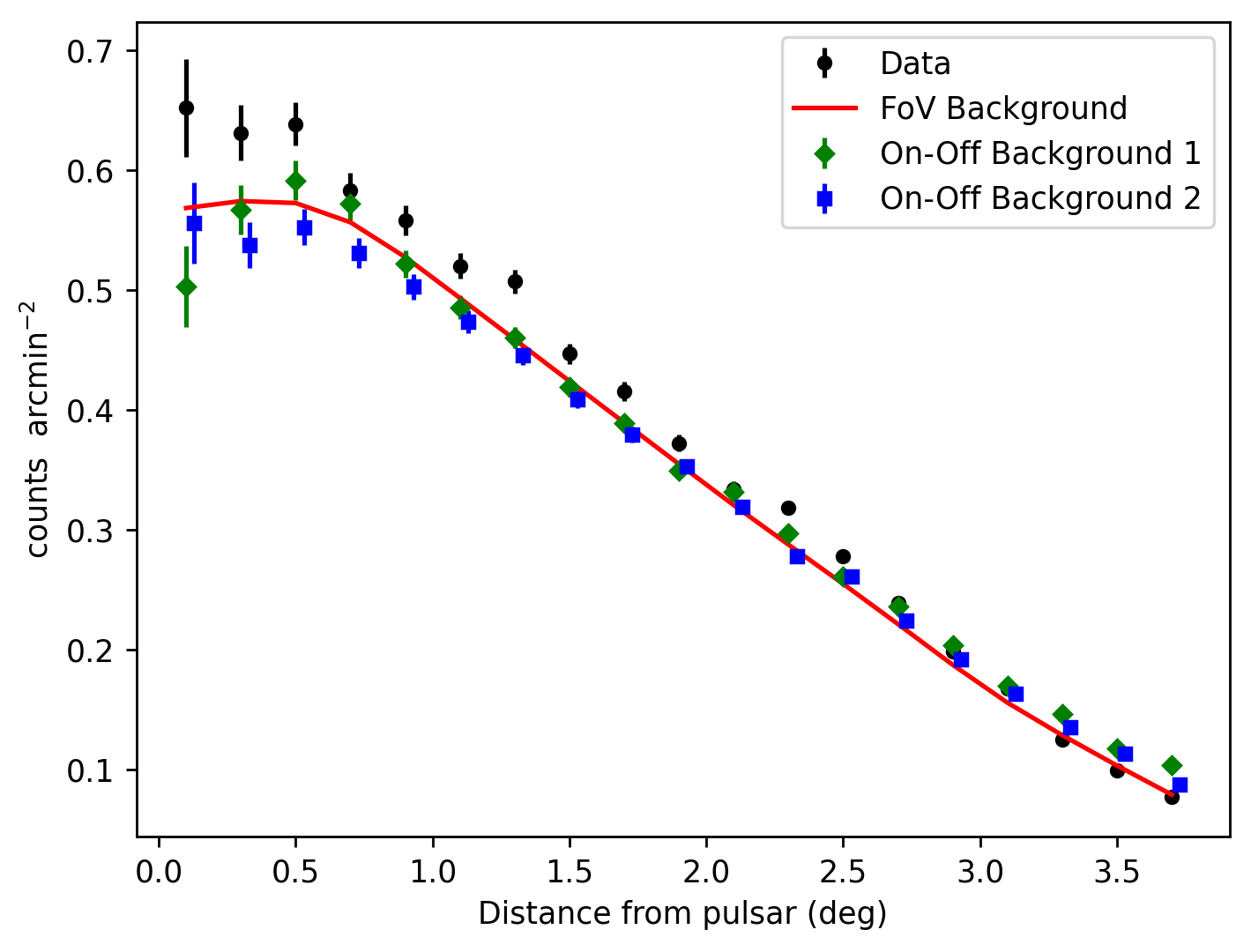
Figure 5:
Radial profile:
Associated data file: [CSV]
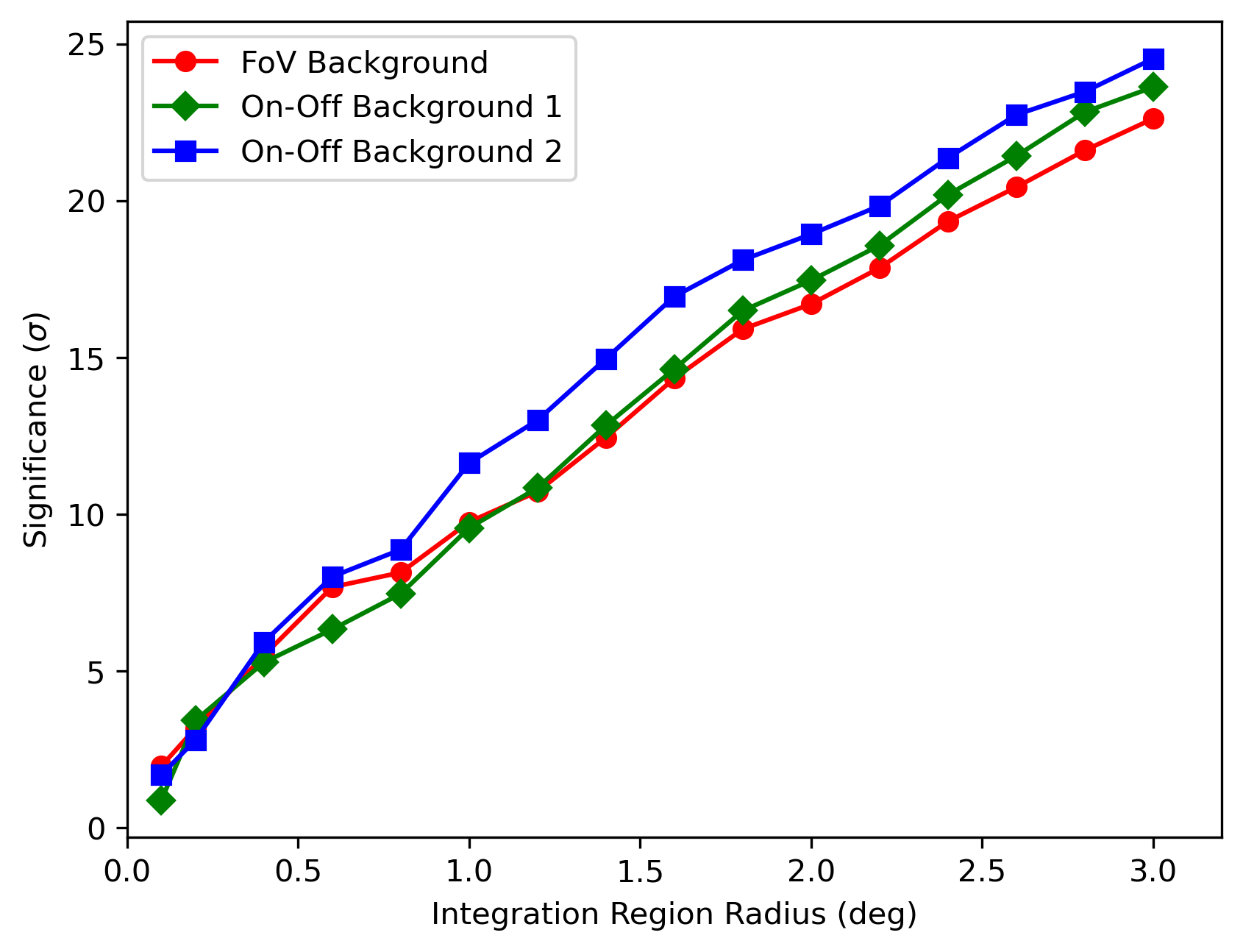
Figure 6:
Significance with integration region radius:
Associated data file: [CSV]
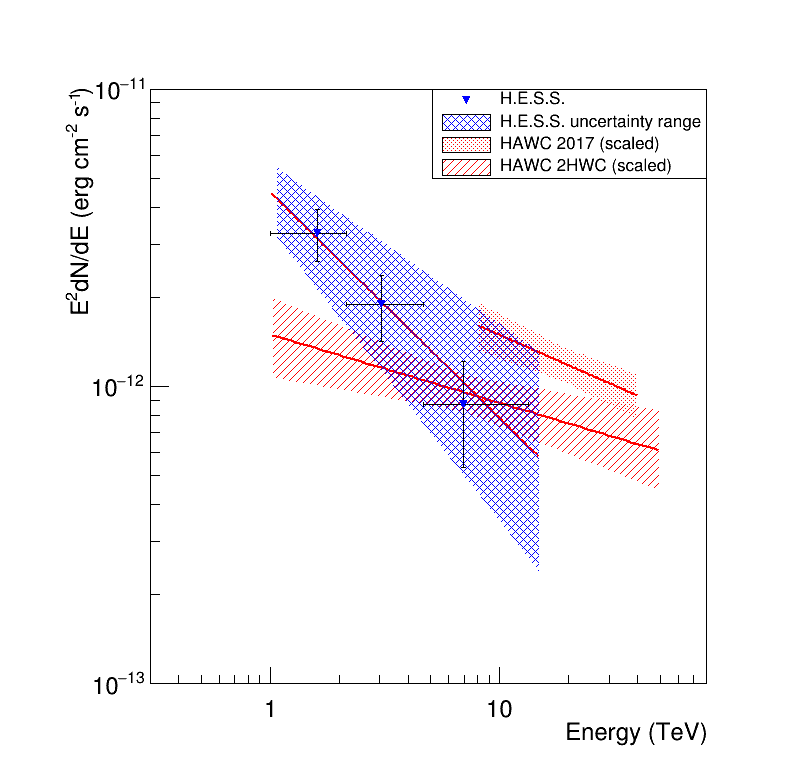
Figure 7:
Spectral energy distribution:
Associated data file: [CSV]
Figure 8:
Radial surface brightness profile:

Associated data files: [CSV]
spectra[CSV]
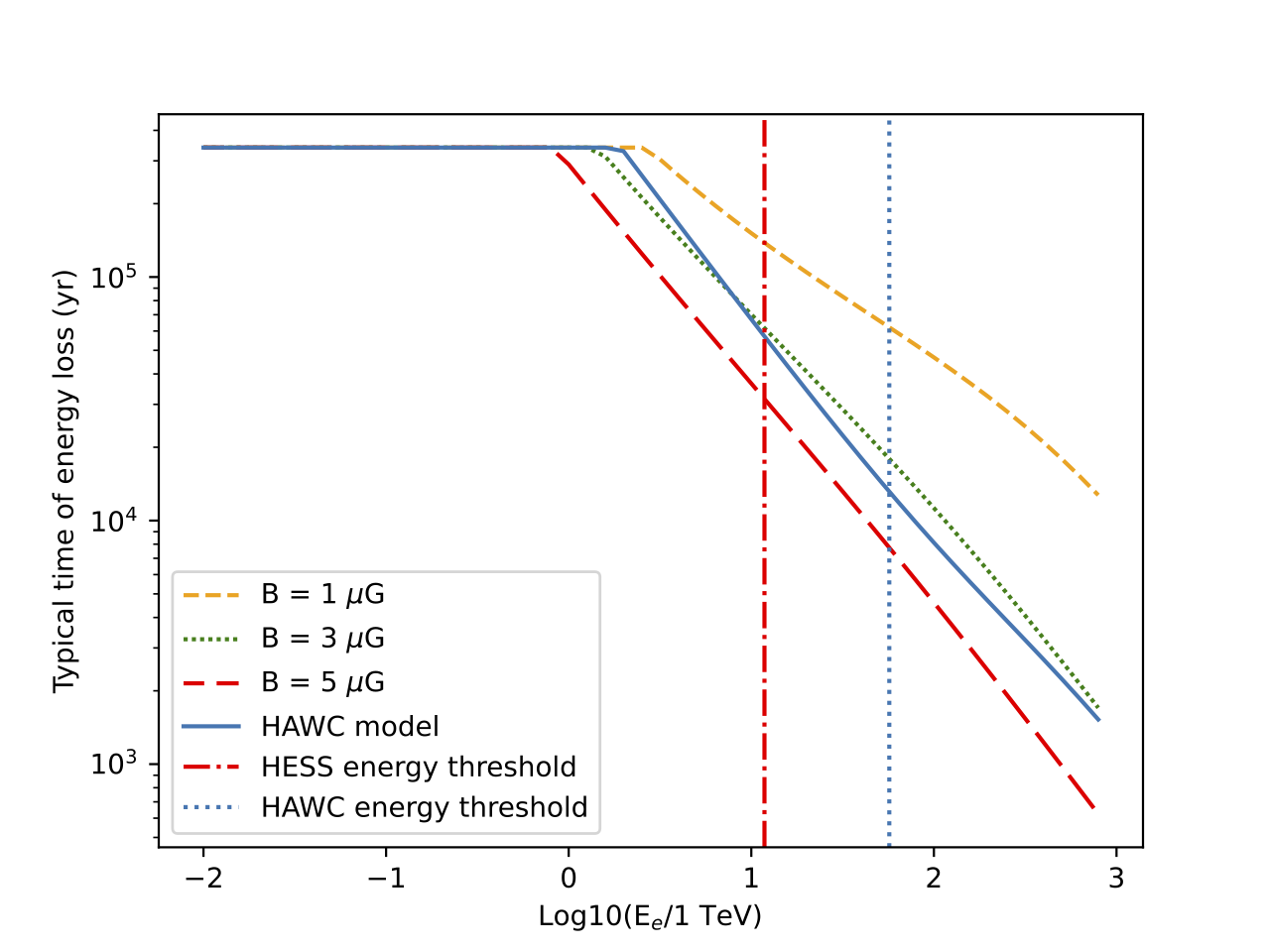
Figure 9:
Energy loss time:
[PDF]
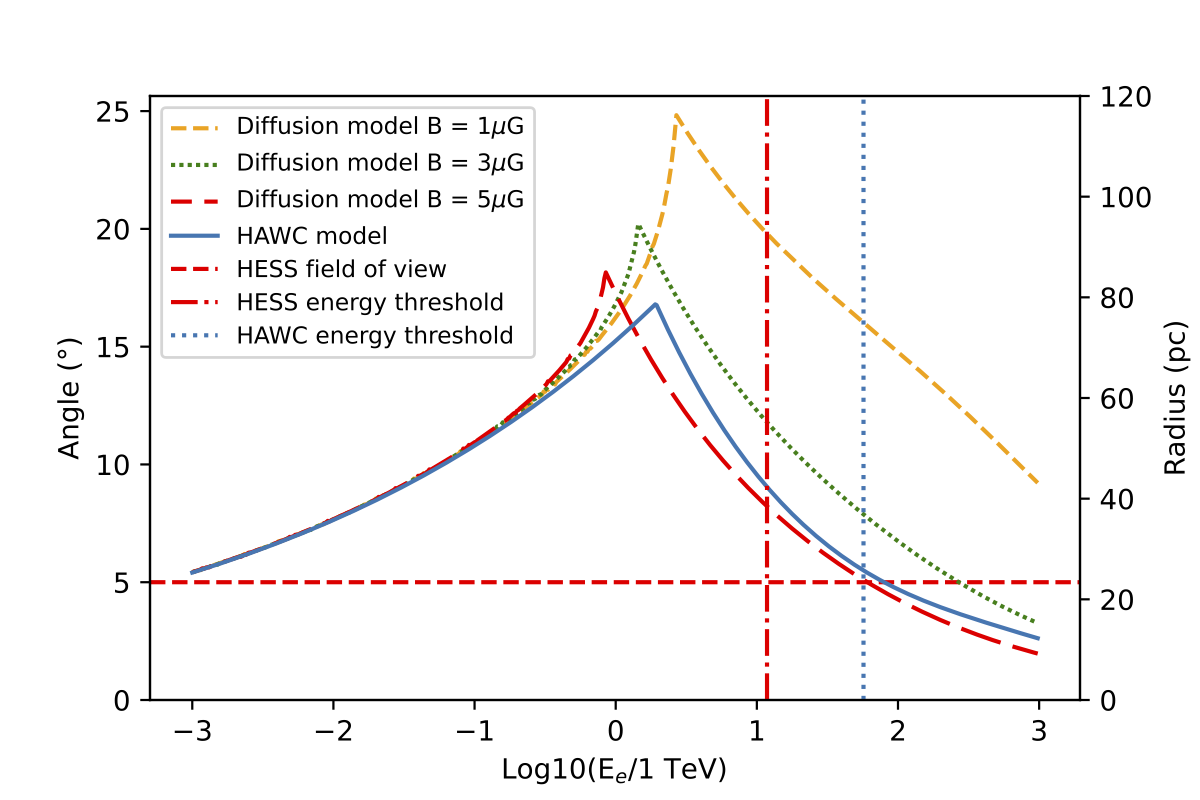
Figure 10:
Diffusion radius:
[PDF]
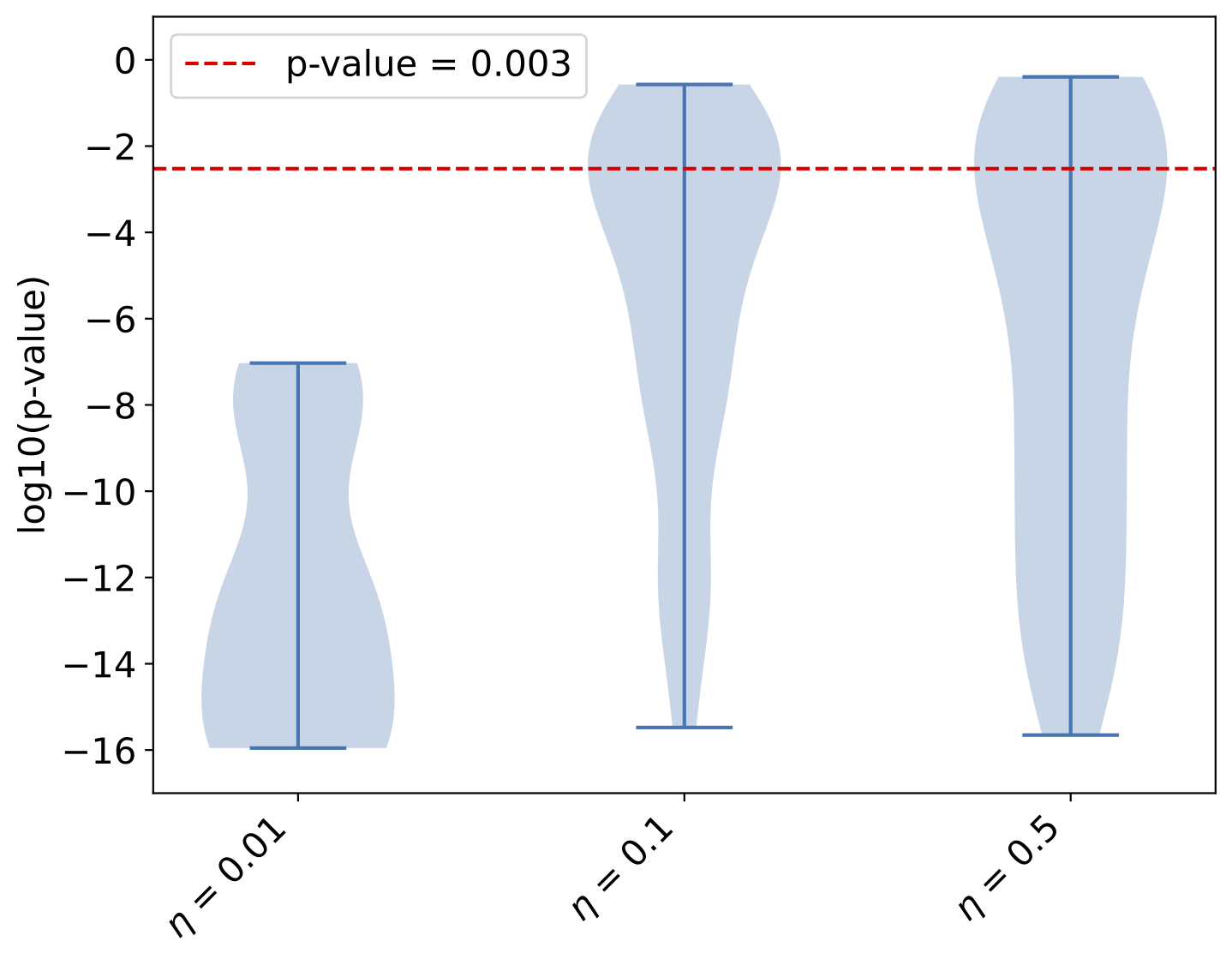
Figure 11:
Model parameter scan p-values:
[PDF]
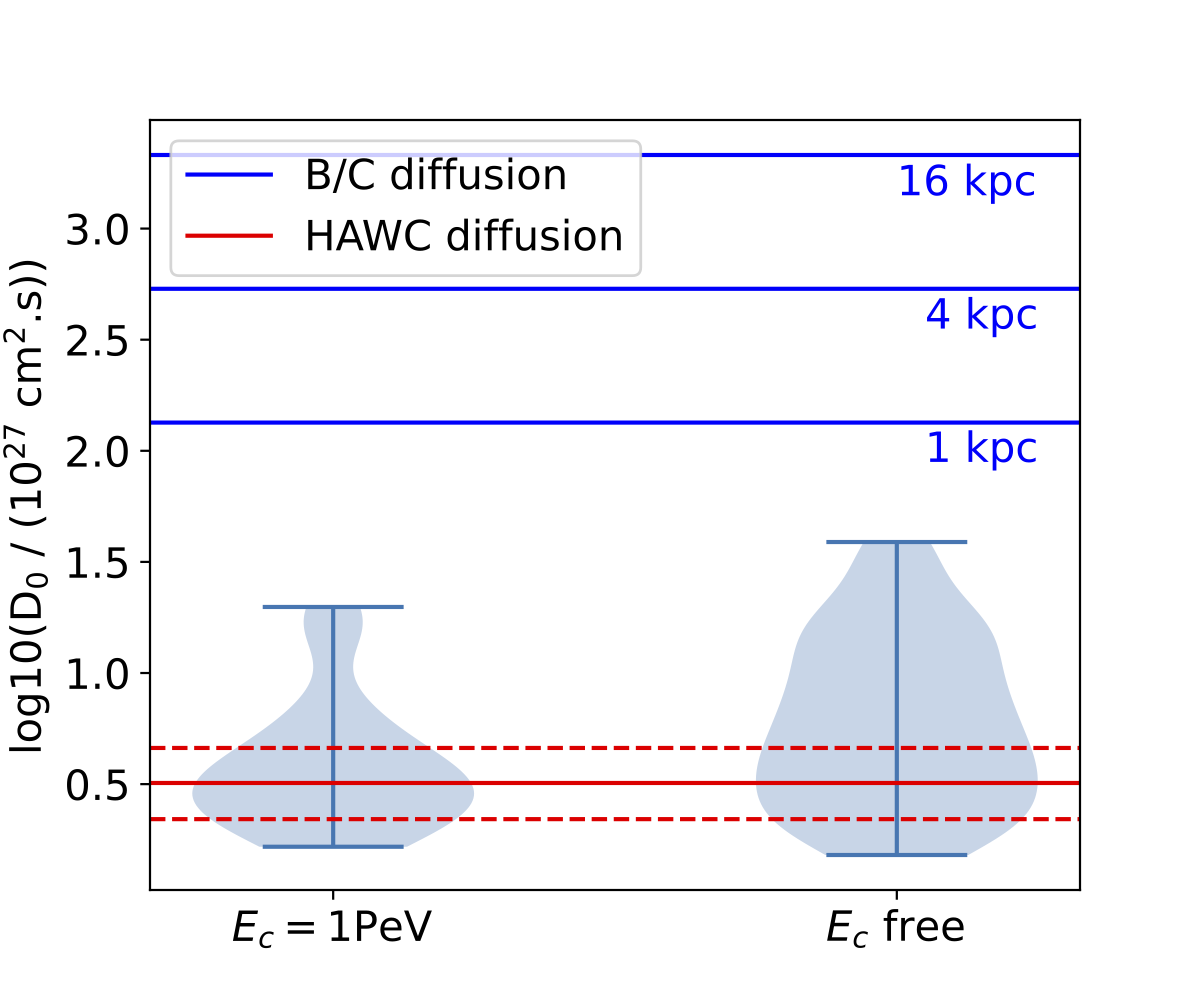
Figure 12:
Energy cut off and injecion index:

[PDF]
Best fit diffusion coefficient:
[PDF]
Figure 13:
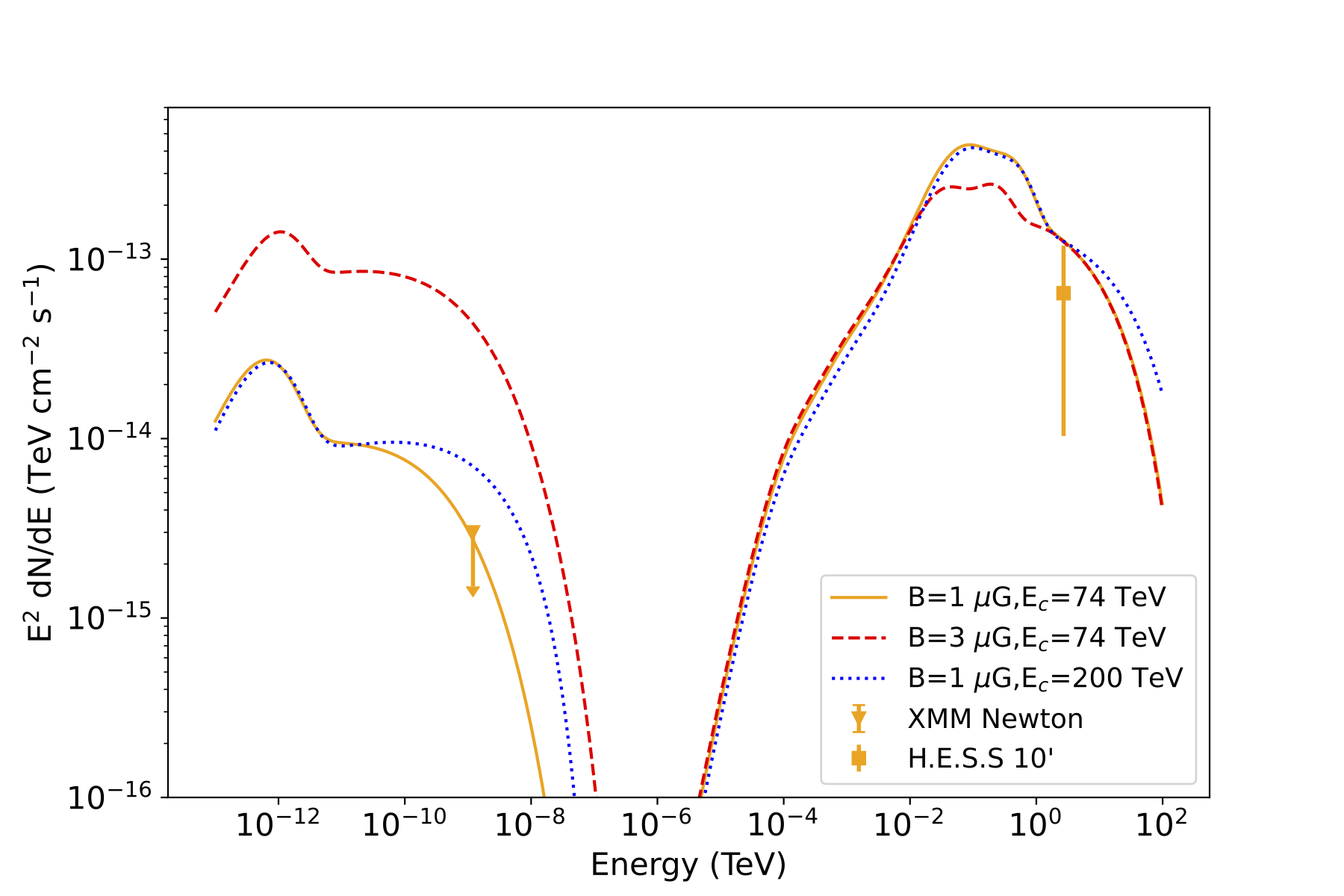
Model SED with X-ray data:
[PDF]
10 arcmin region:
| Instrument | Energy (GeV) | Energy Flux (erg/cm^2/s) | Energy Flux Error (erg/cm^2/s) | Upper Limit (erg/cm^2/s) |
|---|---|---|---|---|
| XMM-Newton | 1.2e-6 | – | – | 5e-15 |
| HESS | 2.7e3 | 1.04e-13 | 8.70e-14 | – |
Figure 14:
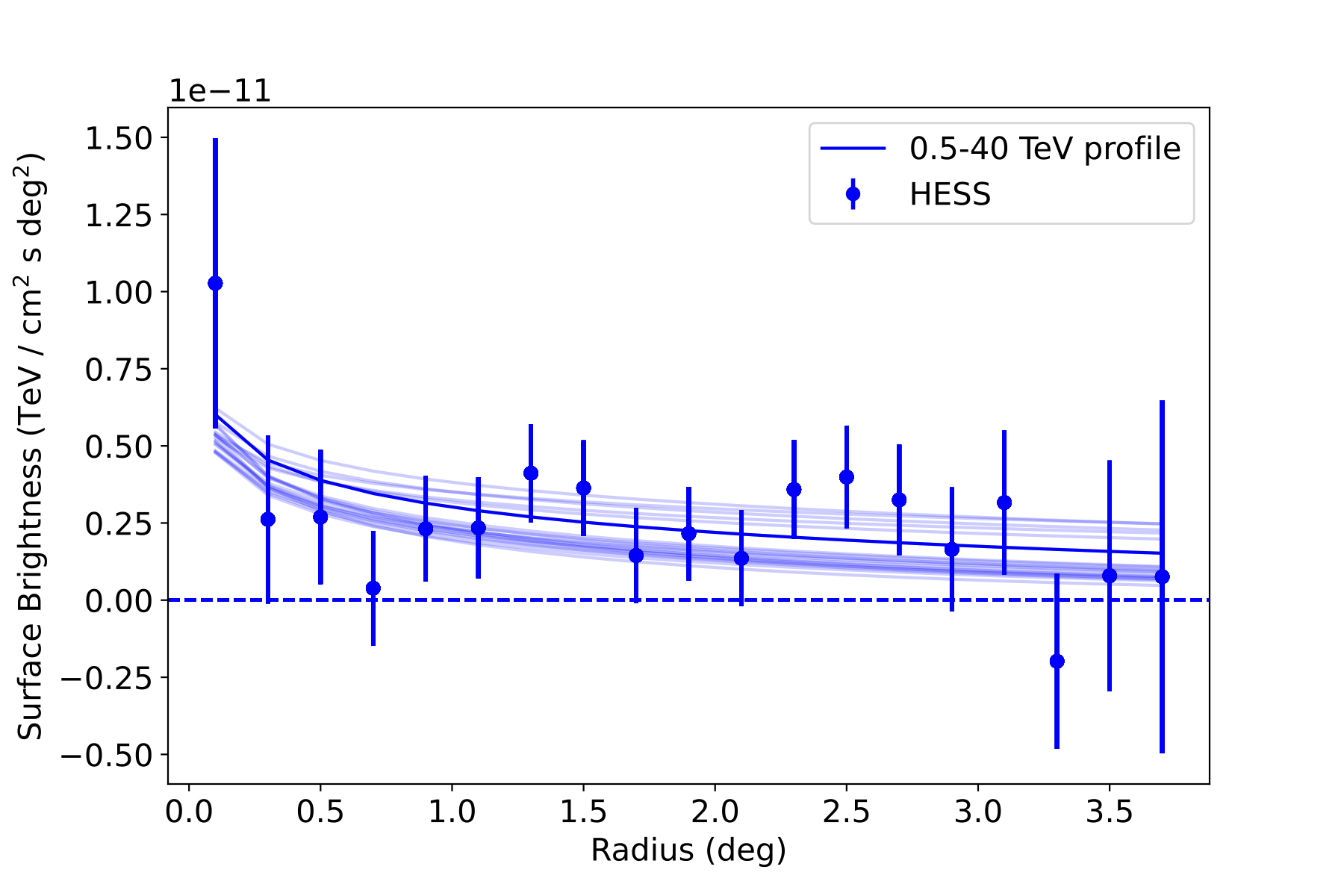
Model fits to HESS profile :
[PDF]
Associated data file: [ZIP]
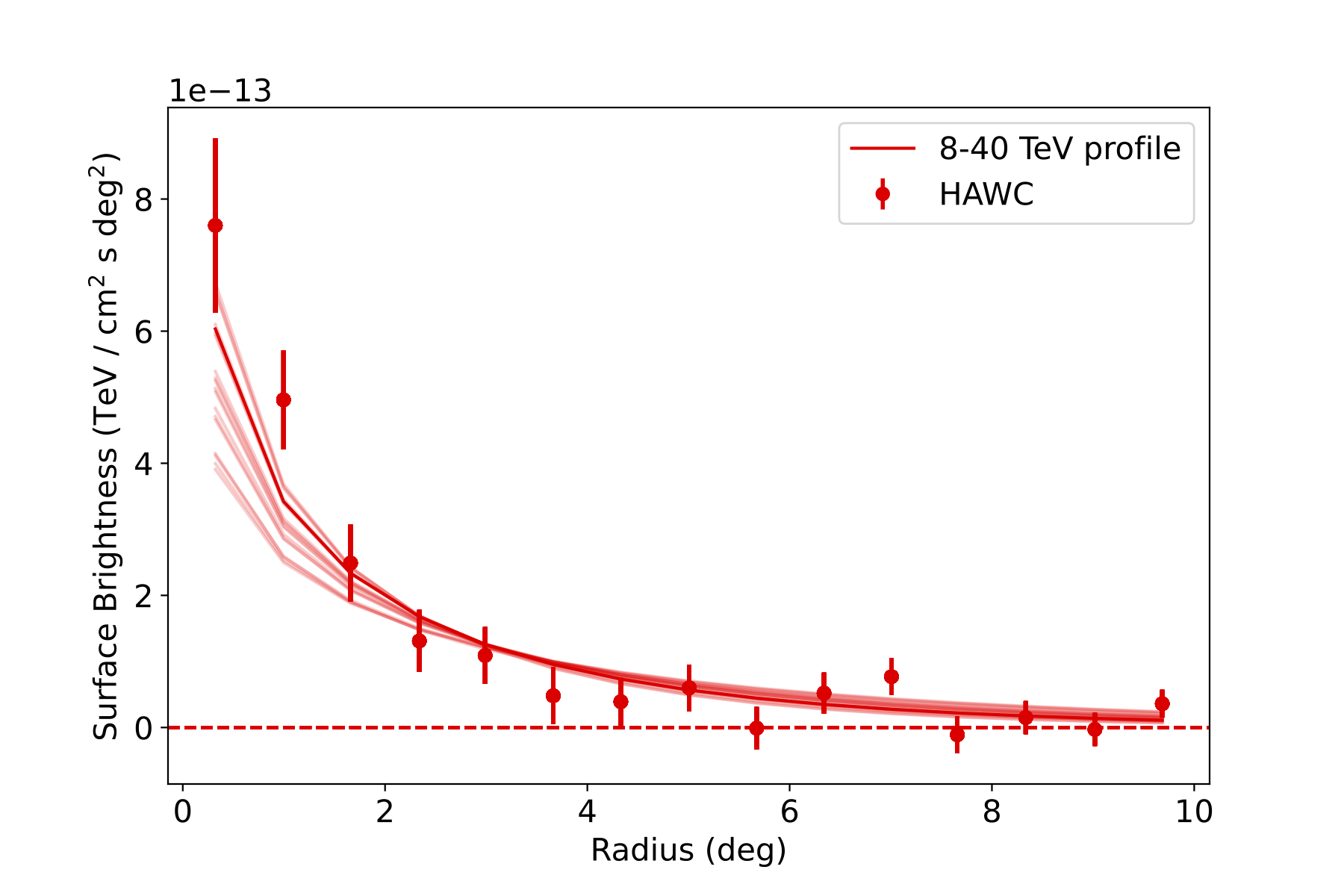
Model fits to HAWC profile :
[PDF]
Associated data file: [ZIP]
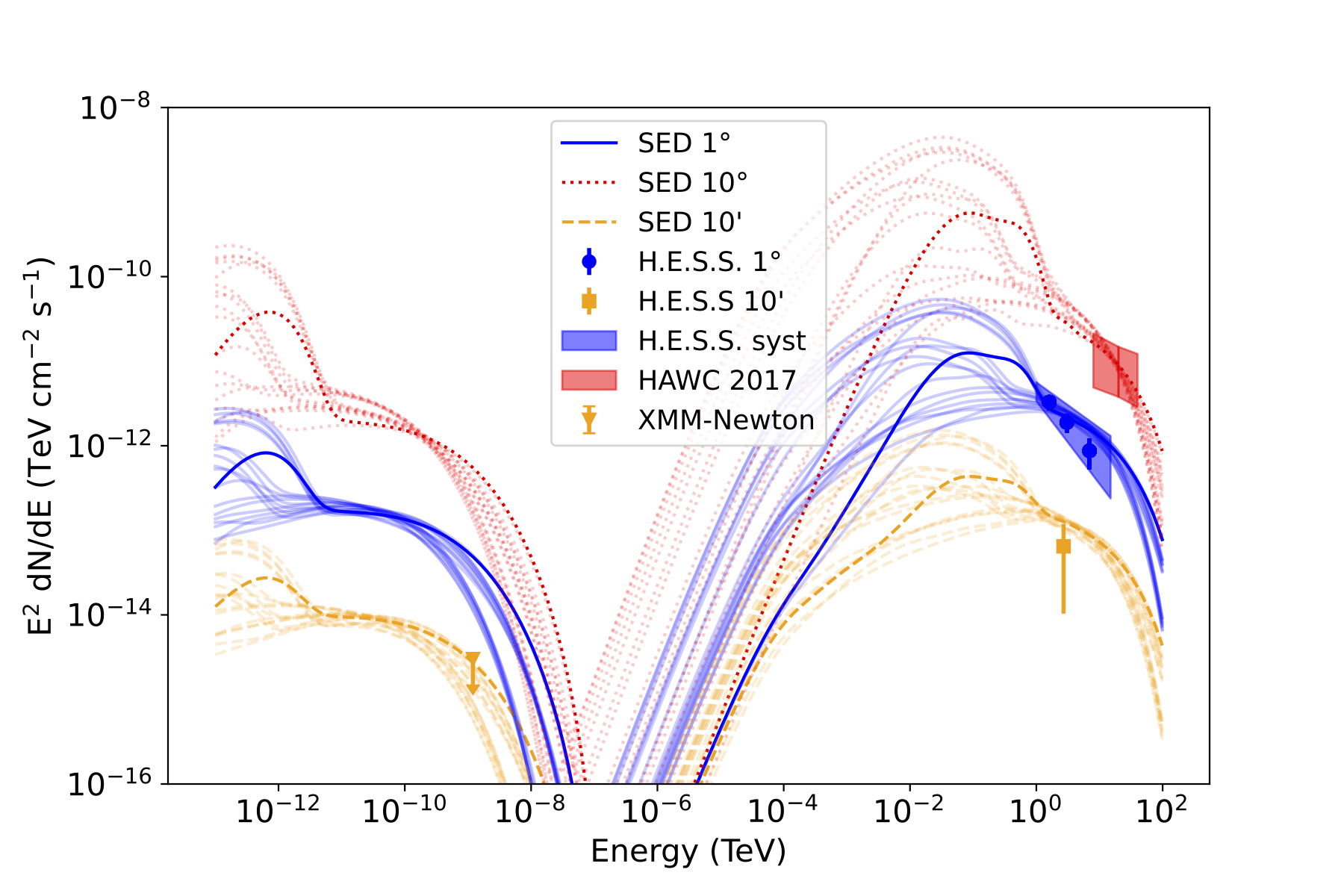
Model fits to SED :
[PDF]
Associated data file: [ZIP]
Appendix
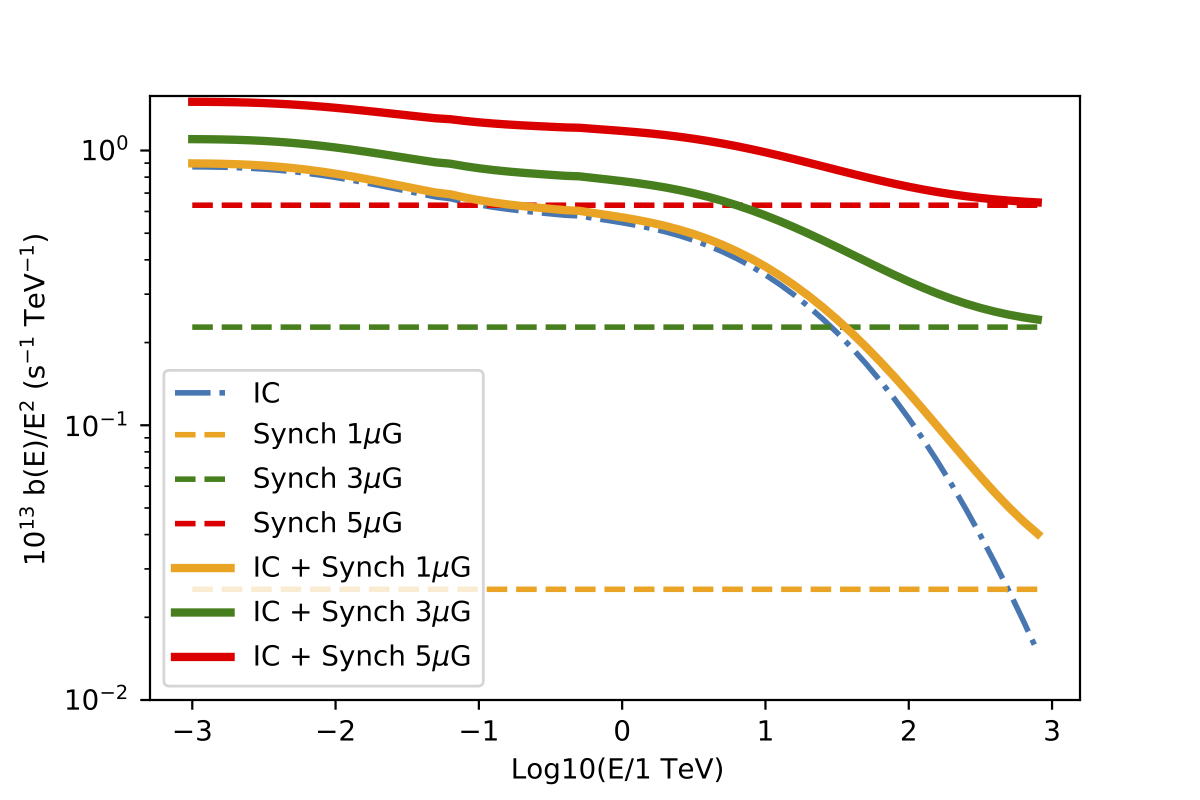
Figure A1:
Inverse Compton energy loss
[PDF]
Collaboration Acknowledgement
The support of the Namibian authorities and of the University of Namibia in facilitating the construction and operation of H.E.S.S. is gratefully acknowledged, as is the support by the German Ministry for Education and Research (BMBF), the Max Planck Society, the German Research Foundation (DFG), the Helmholtz Association, the Alexander von Humboldt Foundation, the French Ministry of Higher Education, Research and Innovation, the Centre National de la Recherche Scientifique (CNRS/IN2P3 and CNRS/INSU), the Commissariat à l’Énergie atomique et aux Énergies alternatives (CEA), the U.K. Science and Technology Facilities Council (STFC), the Irish Research Council (IRC) and the Science Foundation Ireland (SFI), the Knut and Alice Wallenberg Foundation, the Polish Ministry of Education and Science, agreement no. 2021/WK/06, the South African Department of Science and Technology and National Research Foundation, the University of Namibia, the National Commission on Research, Science & Technology of Namibia (NCRST), the Austrian Federal Ministry of Education, Science and Research and the Austrian Science Fund (FWF), the Australian Research Council (ARC), the Japan Society for the Promotion of Science, the University of Amsterdam and the Science Committee of Armenia grant 21AG-1C085. We appreciate the excellent work of the technical support staff in Berlin, Zeuthen, Heidelberg, Palaiseau, Paris, Saclay, Tübingen and in Namibia in the construction and operation of the equipment. This work benefited from services provided by the H.E.S.S. Virtual Organisation, supported by the national resource providers of the EGI Federation.
